
20 SEL Classroom Check-Ins for a Strong Start to the School Year
 Kate Baker —
Looking for classroom check-in activities for back to school and beyond? Discover 20 ready-to-use SEL classroom check-ins for back to school, after school breaks, and throughout the year. Help students reflect, set goals, communicate their needs, and prepare to learn.
Social-emotional learning (SEL) is most effective when it becomes part of everyday classroom life—not just a dedicated lesson. Regular SEL check-ins help students reflect on their learning, communicate their readiness, recognize what they need, and ask for support. Build these check-ins into different points in the learning cycle: at the beginning of class, during transitions between activities, or at the end of an activity or class period.
This collection features 20 SEL check-in activities that go beyond asking, "How are you feeling?" Students set goals, reflect on their strengths, monitor project progress, prepare for assessments, practice executive functioning skills, and communicate their needs in ways that support the CASEL competencies of self-awareness, self-management, relationship skills, responsible decision-making, and social awareness.
Before we begin: The SEL check-in activities in this post are created with BookWidgets. If you're new to BookWidgets, here's what you need to know:
- BookWidgets is an all-in-one interactive lesson and assessment platform that helps teachers create engaging digital activities using 40 widget types and over 35 interactive question types.
- Activities can be shared with a quick link, QR code, or through Google Classroom, Microsoft Teams, Canvas, Moodle, Schoology, and other learning management systems, making them easy to integrate into your existing classroom workflow.
- Student responses are automatically collected in a grading dashboard, where teachers can review work, provide feedback, monitor progress, and identify students who may need additional support.
You can access all of the SEL check-ins in this post for free and explore the complete collection in the BookWidgets SEL Check-Ins folder. To copy, customize, and assign an activity, you'll need a BookWidgets teacher account. New users can start with a 30-day free trial. Students never log in to BookWidgets. They simply complete the activities shared by their teacher, and their submissions are collected in the teacher's BookWidgets account.
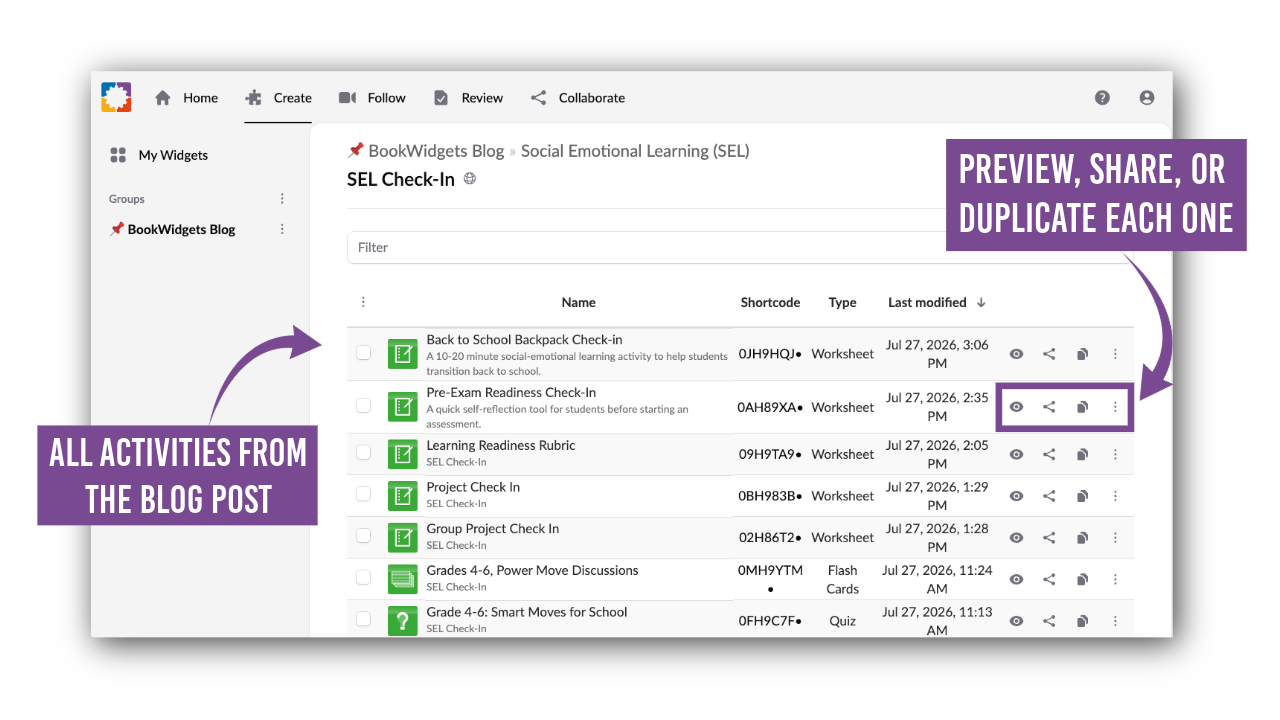
Explore all 20 SEL Check-In Activities in the BookWidgets group folder.
20 Ready-to-Use SEL Check-Ins for Back to School and Beyond
These 20 ready-to-use SEL activities are organized around common classroom moments and different points in the learning cycle. Start the school year with check-ins that help you get to know students, build relationships, and set goals. Then, use quick, reusable reflections, project and assessment check-ins, and skill-building activities throughout the year to help students communicate their needs, monitor their learning, and become more independent learners.
Click the image or caption for each activity to open the ready-to-use BookWidgets lesson in a new tab. From there, you can explore the lesson, copy it to your account, and customize it for your students.
Jump to the SEL Check-Ins You Need
- Quick Back-to-School Check-Ins to Get to Know Students
- Quick SEL Check-Ins to Reuse Throughout the School Year and After School Breaks
- Quick Student Check-Ins for Projects and Assessments
Quick Back-to-School Check-Ins to Get to Know Students
These back-to-school check-ins help teachers learn more about students as individuals and as learners. Along with reflecting on strengths, goals, and support needs, students can demonstrate their understanding of executive functioning, communication, and school-success strategies. This gives teachers an early look at both what students know about themselves and how prepared they are to navigate the routines, expectations, and problem-solving demands of school.
1. Start the School Year with a Backpack Reflection
| Category | Details | |
|---|---|---|
| 🎓 | Grade level | Grades 3-9 |
| ⭐️ | Best for | Back to school, the first week of school, advisory, or homeroom |
| 🤝 | Interaction | Individual |
| ⏱️ | Time needed | 5-10 minutes |
| 🧩 | BookWidgets widget | Worksheet |
In this Annotate Picture question activity, students complete four prompts around a backpack illustration to introduce themselves as learners. They identify a personal strength, share something they're excited to learn, set a goal for the year, and communicate something they want their teacher to know.
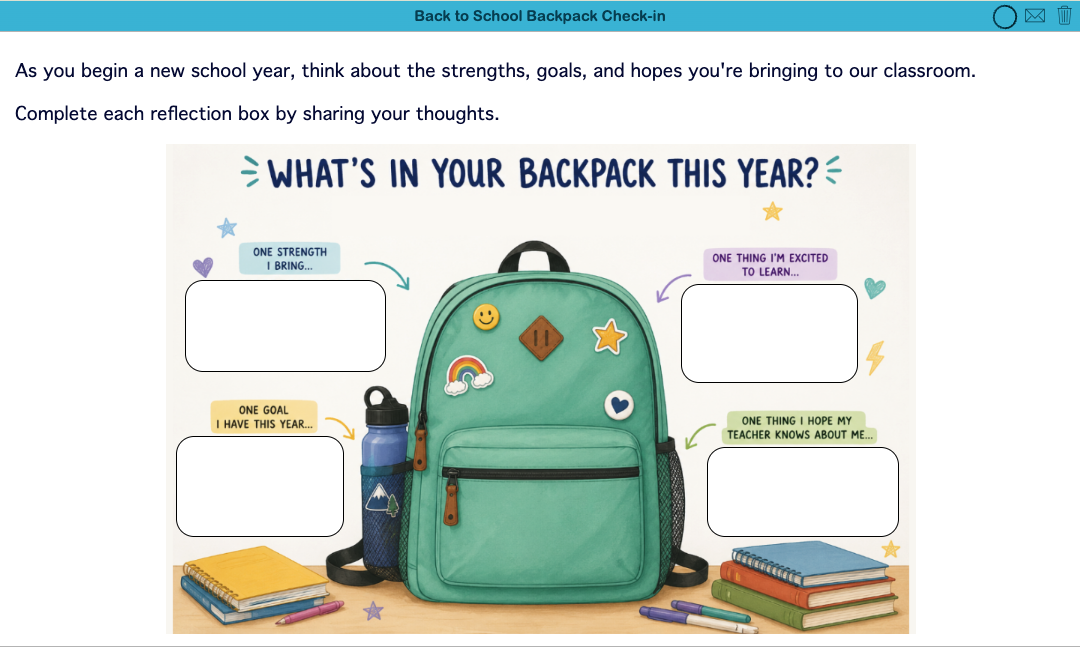
Why this back-to-school check-in supports SEL:
- Builds self-awareness as students identify their strengths, interests, and hopes for the year
- Encourages self-management through personal goal setting
- Gives teachers insight into what matters to each student, supporting early relationship building and personalized support
💡 Looking for more first-week-of-school activities? Start the year by building relationships, establishing routines, and getting students talking with these 20 Ready-to-Use Digital Lesson Activities for the First Day of School. Many of these activities pair perfectly with this backpack reflection to help you create a welcoming classroom community from day one.
2. Build a Brain Character to Check In with Students
| Category | Details | |
|---|---|---|
| 🎓 | Grade level | Grades K-6 |
| ⭐️ | Best for | Morning meetings, soft starts, transitions, or end-of-day reflection |
| 🤝 | Interaction | Individual |
| ⏱️ | Time needed | 10–15 minutes |
| 🧩 | BookWidgets widget | Whiteboard |
Sometimes the hardest part of an SEL check-in is finding the right words. In this creative Whiteboard widget activity, younger students build a brain character that represents how they are thinking and feeling. Using digital stickers, they give their brain a face, hat, accessories, and a speech bubble before adding their own drawings and decorations. Personifying their thoughts and feelings helps students externalize their emotions in a playful, low-pressure way while helping teachers better understand students' emotional readiness to learn.

Why this check-in supports SEL:
- Helps students identify and express their current thoughts, emotions, and mindset through visual creativity
- Provides a low-pressure alternative for students who may find it difficult to explain how they are doing with words alone
- Gives teachers another way to gauge students' emotional readiness and identify opportunities for conversation or support
💡 Looking for more ways to teach with images? Visual activities help students communicate ideas, make thinking visible, and engage with learning in creative ways. Explore 30 Creative Ways to Teach with Interactive Image-Based Lessons for classroom-ready ideas that use images to spark curiosity, reflection, discussion, and deeper learning.
3. Discover What Charges Students' Learning Batteries
| Category | Details | |
|---|---|---|
| 🎓 | Grade level | Grades 3-12 |
| ⭐️ | Best for | Back to school, getting to know students, advisory, or homeroom |
| 🤝 | Interaction | Individual |
| ⏱️ | Time needed | 5-10 minutes |
| 🧩 | BookWidgets widget | Worksheet |
What helps each student feel motivated, focused, and ready to learn? In this Annotate Picture question activity, students use a learning battery metaphor to reflect on the conditions and strategies that affect them as learners. They identify what powers them up, helps them recharge, drains their battery, and keeps them going when learning gets difficult. Visual examples around the battery help spark ideas without limiting students' responses.

Why this learning battery check-in supports SEL:
- Builds self-awareness as students identify what motivates, recharges, and challenges them as learners
- Encourages self-management by helping students recognize strategies that support focus and persistence
- Gives teachers insight into the conditions and supports that may help individual students learn
⚡ Need to recharge your class? Sometimes students need more than a moment to reflect; they need an opportunity to move, reset, and refocus. Explore 15 Fun Classroom Energizers for Students for quick activities that can help bring energy, focus, and engagement back to the classroom.
4. Open a Learning Locker for Back-to-School Reflection
| Category | Details | |
|---|---|---|
| 🎓 | Grade level | Grades 3-9 |
| ⭐️ | Best for | Back to school, getting to know students, advisory, or homeroom |
| 🤝 | Interaction | Individual |
| ⏱️ | Time needed | 5-10 minutes |
| 🧩 | BookWidgets widget | Worksheet |
In this Annotate Picture question activity, students fill their digital learning locker with one strength they bring, something they're excited to learn, a goal for the school year, and something they hope their teacher knows about them. The visual format provides a structured way for students to introduce themselves as learners at the beginning of the year.

Why this learning locker check-in supports SEL:
- Encourages students to recognize the strengths and interests they bring to the classroom
- Prompts students to set a goal and consider what they want to work toward during the school year
- Gives students a structured way to tell their teacher something they want them to know, supporting early connection and communication
📝 Put graphic organizers to work beyond SEL check-ins. Visual structures can help students organize ideas, make their thinking visible, and build confidence before tackling more complex tasks. Explore 4 Graphic Organizers to Build Student Writing Confidence in the Age of AI for ready-to-use Venn diagrams, empathy maps, journey maps, and Sketch & Tell activities that scaffold student thinking and writing.
5. Plan Out the Year with a Back-to-School Road Map
| Category | Details | |
|---|---|---|
| 🎓 | Grade level | Grades 3-12 |
| ⭐️ | Best for | Back to school, goal setting, advisory, or homeroom |
| 🤝 | Interaction | Individual |
| ⏱️ | Time needed | 5-10 minutes |
| 🧩 | BookWidgets widget | Worksheet |
In this Annotate Picture question activity, students create a personal road map for the school year. They identify strengths they can rely on, choose a destination or goal, recognize pit stops that help them learn and recharge, and anticipate possible roadblocks along the way.
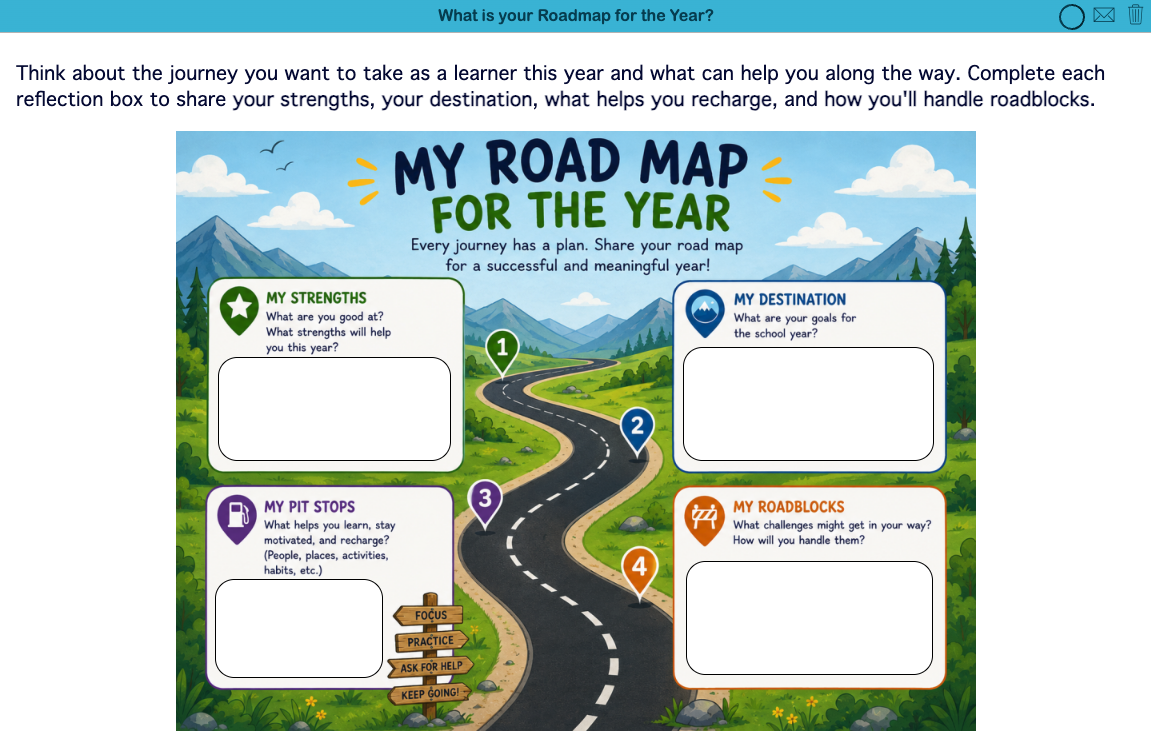
Why this back-to-school road map supports SEL:
- Helps students connect their existing strengths to a goal or destination they want to reach
- Builds self-management as students identify supports, habits, and strategies they can use along the way
- Encourages students to anticipate potential roadblocks and consider how they might respond when challenges arise
🗺️ Start the school year with activities that build connection and set the tone for learning. Explore 15 Creative Lesson Ideas for the First Day of School for more ways to help students get to know one another, reflect, collaborate, and begin the year with an engaging classroom experience.
6. Look Ahead with a "My Year Ahead" SEL Reflection
| Category | Details | |
|---|---|---|
| 🎓 | Grade level | Grades 6-12 |
| ⭐️ | Best for | Back to school, goal setting, advisory, or homeroom |
| 🤝 | Interaction | Individual |
| ⏱️ | Time needed | 5-10 minutes |
| 🧩 | BookWidgets widget | Worksheet |
In this Annotate Picture question activity, middle and high school students complete a My Year Ahead self-reflection organized around four areas: Strengths, Direction, Supports, and Challenges. Students consider what they bring to the year, what they want to accomplish, what helps them succeed, and what obstacles they may need to navigate.
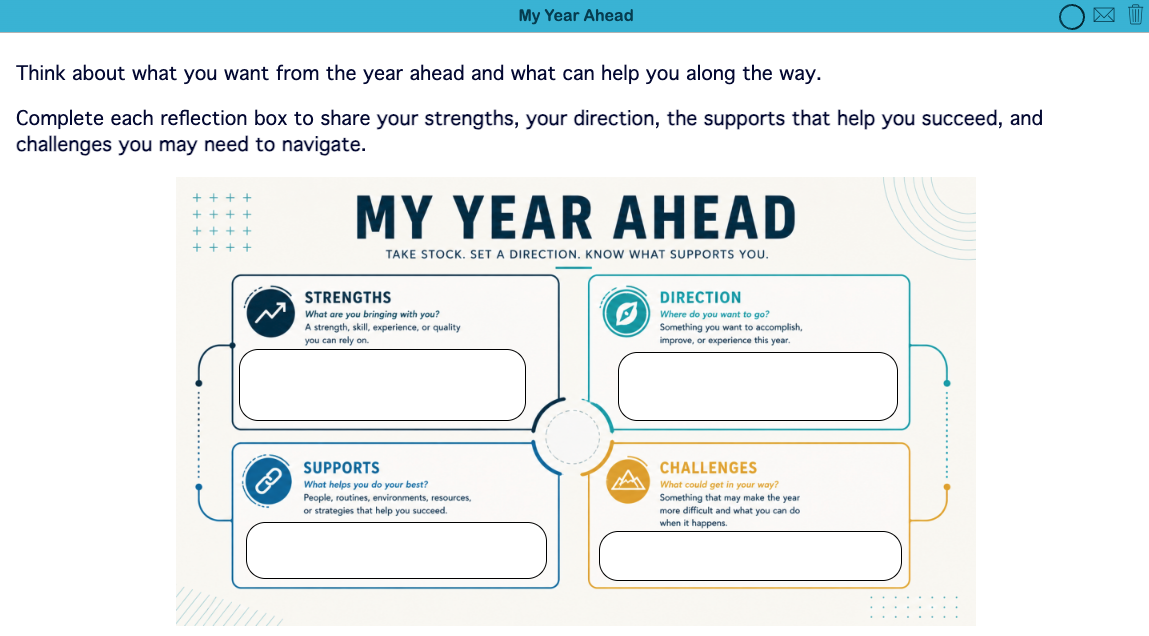
Why this year-ahead check-in supports SEL:
- Gives older students an opportunity to take stock of their strengths and establish a meaningful direction for the year
- Encourages students to identify the people, routines, resources, and strategies that support their success
- Helps teachers understand students' individual goals, anticipated challenges, and support needs at the beginning of the year
💡 Looking for more SEL activities? Explore 10 Creative Social-Emotional Learning Activities to Use in Class for additional ready-to-use ideas that help students build self-awareness, strengthen relationships, and develop essential social-emotional skills throughout the school year.
7. Explore Smart School Moves
| Category | Details | |
|---|---|---|
| 🎓 | Grade level | Grades 4-9 |
| ⭐️ | Best for | Teaching and reinforcing executive functioning and learning strategies |
| 🤝 | Interaction | Individual, partners, small groups, or whole class |
| ⏱️ | Time needed | 5-10 minutes |
| 🧩 | BookWidgets widget | Quiz |
In this Quiz widget activity, students answer ten interactive questions about executive functioning skills such as planning, organization, task initiation, prioritization, time management, working memory, cognitive flexibility, and self-monitoring. Students receive immediate, color-coded feedback, while teachers gain quantitative data about which school-success strategies students understand and where additional instruction may be needed.

Why this check-in supports SEL and learning skills:
- Checks students' understanding of executive functioning skills such as planning, organization, prioritization, time management, and self-monitoring
- Helps students recognize strategies for navigating common school situations and the hidden curriculum of how to operate successfully as a student
- Gives teachers quantitative data about which learning strategies students understand and where additional instruction or support may be needed
💡 Planning interactive learning experiences for the year ahead? BookWidgets offers a wide variety of question types that can be combined to support reflection, assessment, practice, creativity, and more. Explore The Best 35+ Interactive Question Types for Digital Tests and Assignments for ideas you can use as you design digital activities for your students throughout the school year.
8. Discuss Power Move Strategies for School Success
| Category | Details | |
|---|---|---|
| 🎓 | Grade level | Grades 4-9 |
| ⭐️ | Best for | Small-group discussions, advisory, SEL lessons, or executive functioning mini-lessons |
| 🤝 | Interaction | Whole class, pairs or small groups |
| ⏱️ | Time needed | 5–30 minutes |
| 🧩 | BookWidgets widget | Flash Cards |
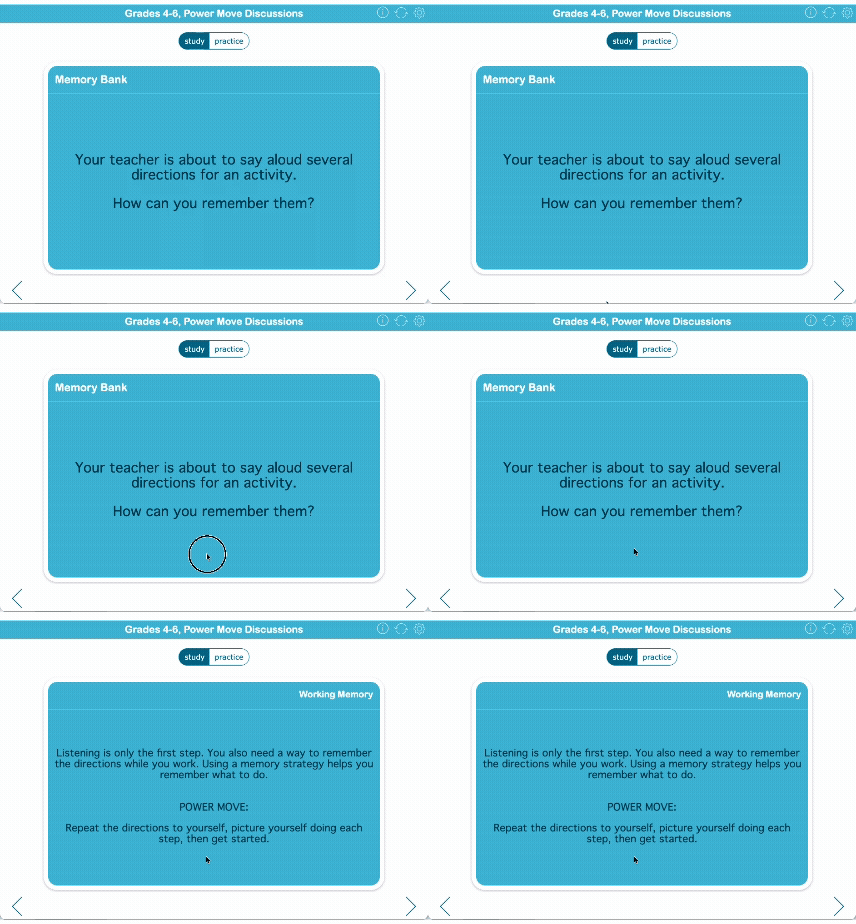
In this Flash Cards widget activity, students discuss common school situations and predict an effective strategy before revealing the suggested Power Move. The format is flexible: use one card as a 5-minute whole-class check-in over multiple days, or have students work through several cards in pairs or small groups for a longer 20–30 minute discussion activity. As students explain and compare their ideas, teachers can observe their reasoning, communication, participation, and understanding of executive functioning strategies.
Why this check-in supports SEL and learning skills:
- Checks how students apply executive functioning, communication, and problem-solving skills to common school situations
- Encourages students to explain their thinking, listen to different perspectives, and evaluate possible strategies with their peers
- Gives teachers qualitative information through observation of students' reasoning, communication, participation, and group dynamics
💡 Looking for more ways to get students talking? Meaningful conversations help students develop communication, critical thinking, and social-emotional skills. Explore 15+ Exciting Conversation Activities That Will Boost Student Participation for discussion strategies, debate ideas, and collaborative activities that encourage every student to join the conversation.
Quick SEL Check-Ins to Reuse Throughout the School Year and After School Breaks
These quick SEL check-ins are designed to be reused throughout the school year. Most of these reusable check-ins take five minutes or less, making them easy to use during morning meetings, advisory, at the beginning of class, between activities, or at the end of a lesson.
There's no need to make a new copy of the activity for every check-in. Students can clear their previous answers and complete the same BookWidgets activity again, and each submission receives its own unique timestamp. This makes it easy to return to the same check-in throughout the year while keeping each response as a separate submission.
9. Check In with a Traffic Light Reflection
| Category | Details | |
|---|---|---|
| 🎓 | Grade level | Grades 3-12 |
| ⭐️ | Best for | Morning meetings, lesson transitions, independent work, or the end of class |
| 🤝 | Interaction | Individual |
| ⏱️ | Time needed | 3–5 minutes |
| 🧩 | BookWidgets widget | Whiteboard |
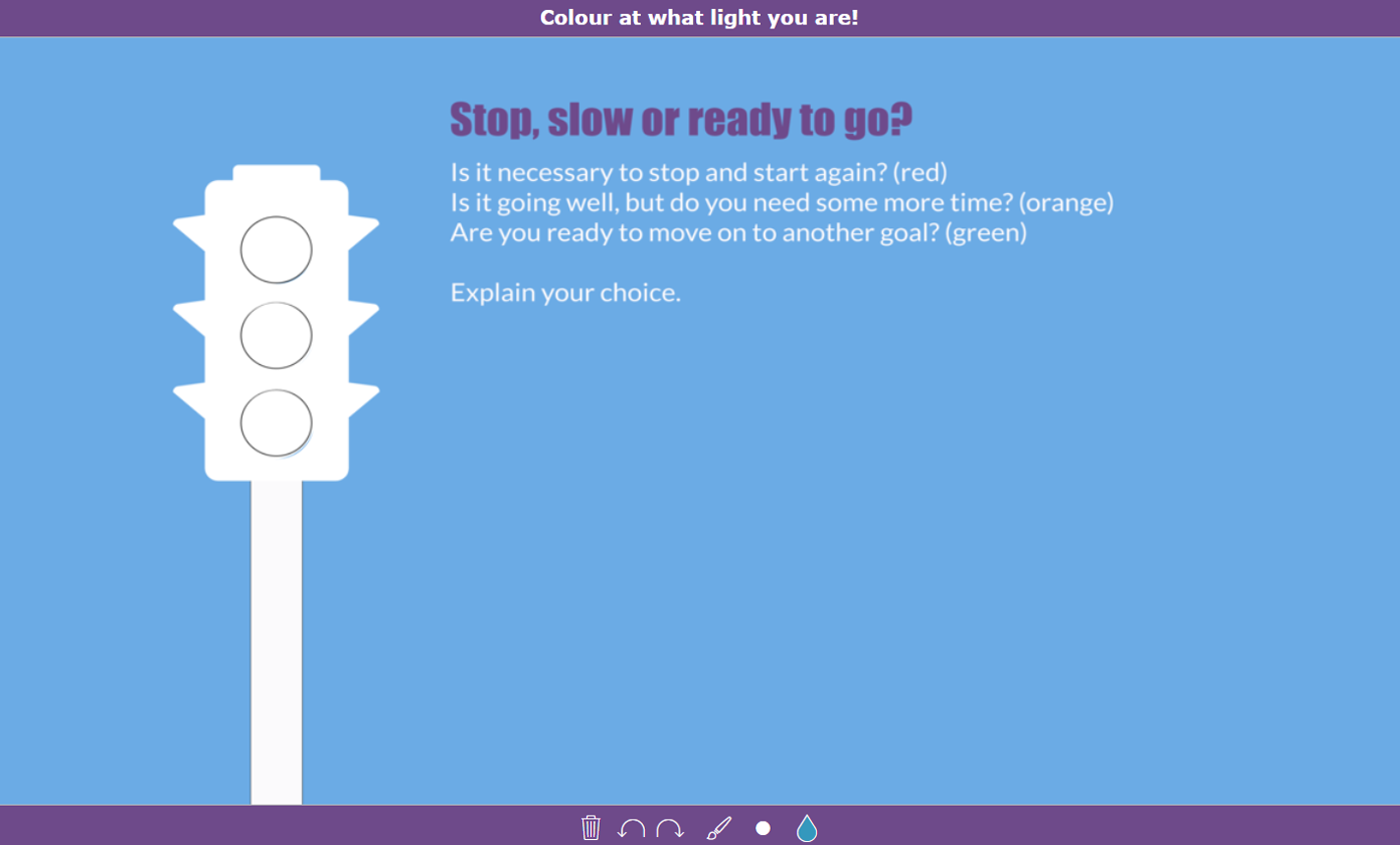
Sometimes students don't need to engage in a lengthy discussion or write a long reflection—they just need a quick, visual way to communicate how they're doing. In this Whiteboard widget activity, students color a traffic light to indicate how they are feeling about their learning or emotional readiness and add text or other images to quickly explain their color choice. A green light may signal confidence and readiness, yellow can indicate uncertainty or the need for clarification, and red lets teachers know a student may be feeling overwhelmed or in need of additional support.
Why this traffic light check-in supports SEL:
- Gives students a quick, visual way to communicate their confidence and readiness to learn
- Provides a low-pressure way for students to indicate when they feel uncertain, overwhelmed, or in need of support
- Helps teachers quickly identify who may benefit from clarification, encouragement, or individual follow-up
💡 Looking for more ways to check in with students? Traffic lights are just one of many versatile exit ticket strategies. Explore 60 Digital Exit Tickets for Teachers: The Ultimate Exit Ticket Guide for dozens of additional ideas that can easily be adapted into SEL check-ins, formative assessments, or lesson reflections.
10. Take a Quick Learning Battery Check
| Category | Details | |
|---|---|---|
| 🎓 | Grade level | Grades 3-12 |
| ⭐️ | Best for | Morning check-ins, returning from breaks, lesson transitions, or anytime students need a reset |
| 🤝 | Interaction | Individual |
| ⏱️ | Time needed | 3–5 minutes |
| 🧩 | BookWidgets widget | Worksheet |
Students' energy and readiness can change throughout the day, week, and school year. This quick Annotate Picture question activity gives students a simple way to pause and consider where their learning battery is right now. Students select whether they feel Full, Charged, Running Low, or Empty, then briefly explain what would help them focus, recharge, or keep going. Teachers can use this recurring SEL check-in after weekends and school breaks, during busy stretches of the year, or whenever students may benefit from a quick reset.

Why this quick battery check supports SEL:
- Builds self-awareness as students pause to recognize their current energy, focus, and readiness to learn
- Encourages self-management by asking students to identify what could help them recharge, refocus, or keep going
- Gives teachers a quick snapshot of changing student needs after weekends, school breaks, transitions, or demanding periods
11. Check In on Students' Emotions and Readiness to Learn
| Category | Details | |
|---|---|---|
| 🎓 | Grade level | Grades 3-12 |
| ⭐️ | Best for | Morning meetings, advisory, homeroom, or the start of any class |
| 🤝 | Interaction | Individual |
| ⏱️ | Time needed | 3–5 minutes |
| 🧩 | BookWidgets widget | Worksheet |
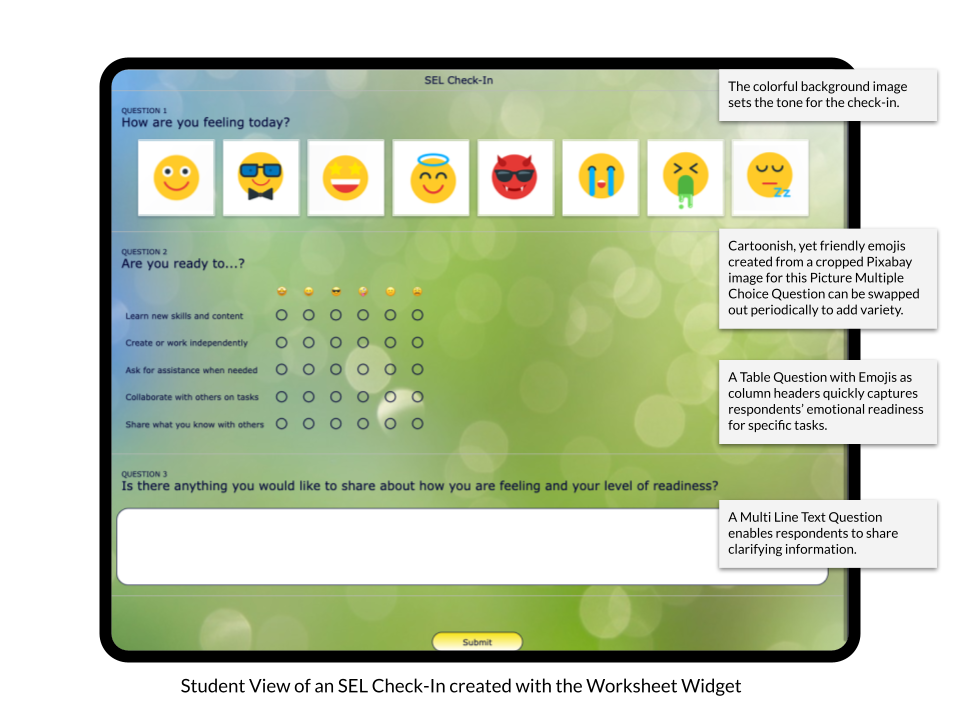
A quick student check-in helps teachers identify students who may need encouragement, support, or additional challenges before instruction begins. In this Worksheet widget activity, students reflect on their current emotional state, rate their readiness to participate in different aspects of learning, and share any additional thoughts they want their teacher to know. By combining emotional awareness with academic readiness, this check-in helps teachers better understand how students are feeling before instruction begins while fostering a classroom culture where every student feels seen and heard.
Why this SEL check-in supports student well-being:
- Helps students consider both their current emotional state and their readiness to participate in learning
- Gives students a private opportunity to communicate thoughts, concerns, or support needs to their teacher
- Helps teachers identify students who may need encouragement, additional support, or a different level of challenge before instruction begins
12. Help Students Set a Daily SEL Goal
| Category | Details | |
|---|---|---|
| 🎓 | Grade level | Grades K-5 |
| ⭐️ | Best for | Morning meetings, soft starts, or daily goal setting |
| 🤝 | Interaction | Individual |
| ⏱️ | Time needed | 3–5 minutes |
| 🧩 | BookWidgets widget | Worksheet |
In this Worksheet widget activity, elementary students choose a social-emotional skill to practice, such as asking questions, helping others, using kind words, or being a careful listener. They then record an audio response explaining how they plan to use that skill during the day.

Why this SEL check-in supports student growth:
- Builds self-awareness as students choose a social-emotional skill they want to strengthen
- Develops self-management by turning that choice into a specific goal for the day
- Encourages students to connect skills such as listening, asking questions, helping others, and using kind words to their everyday classroom actions
💡 Want to help students become more independent learners? Classroom check-ins are just one piece of the puzzle. Discover practical strategies for teaching self-regulated learning (SRL) so students can set goals, monitor their progress, reflect on their learning, and take greater ownership of their success. Explore How to Encourage Self-Regulated Learning in School: An SRL Blueprint for Teachers to learn how self-awareness, goal setting, self-monitoring, and reflection work together to build confident, independent learners.
13. Foster Meaningful Reflection with a Learning Readiness Rubric
| Category | Details | |
|---|---|---|
| 🎓 | Grade level | Grades 8-12+ |
| ⭐️ | Best for | Beginning of class, advisory, or before challenging tasks |
| 🤝 | Interaction | Individual |
| ⏱️ | Time needed | 3-5 minutes |
| 🧩 | BookWidgets widget | Worksheet |
In this Worksheet widget activity, students complete a Learning Readiness Rubric to evaluate their focus, energy, preparedness, confidence, collaboration, and stress before learning begins. An open-ended reflection gives students space to share a success, explain a challenge, or communicate support they may need.

Why this learning readiness check-in supports SEL:
- Helps students assess multiple dimensions of their readiness to learn, including focus, energy, preparedness, confidence, collaboration, and stress
- Encourages students to recognize when a challenge or support need may affect their learning
- Gives teachers actionable information they can use to provide timely encouragement, resources, or individual follow-up
💡 A well-designed rubric can do more than measure learning. It can guide reflection, support self-assessment, and help students understand what success looks like. Explore How to Create Digital Rubrics for Your Student Evaluations: The Teacher Guide on Rubrics for practical guidance, rubric examples, and step-by-step instructions for creating and grading digital rubrics with BookWidgets.
14. Reset with a Learning Desk Check
| Category | Details | |
|---|---|---|
| 🎓 | Grade level | Grades 2-8 |
| ⭐️ | Best for | Returning from breaks, weekly check-ins, classroom resets, or desk clean-outs |
| 🤝 | Interaction | Individual |
| ⏱️ | Time needed | 3-5 minutes |
| 🧩 | BookWidgets widget | Worksheet |
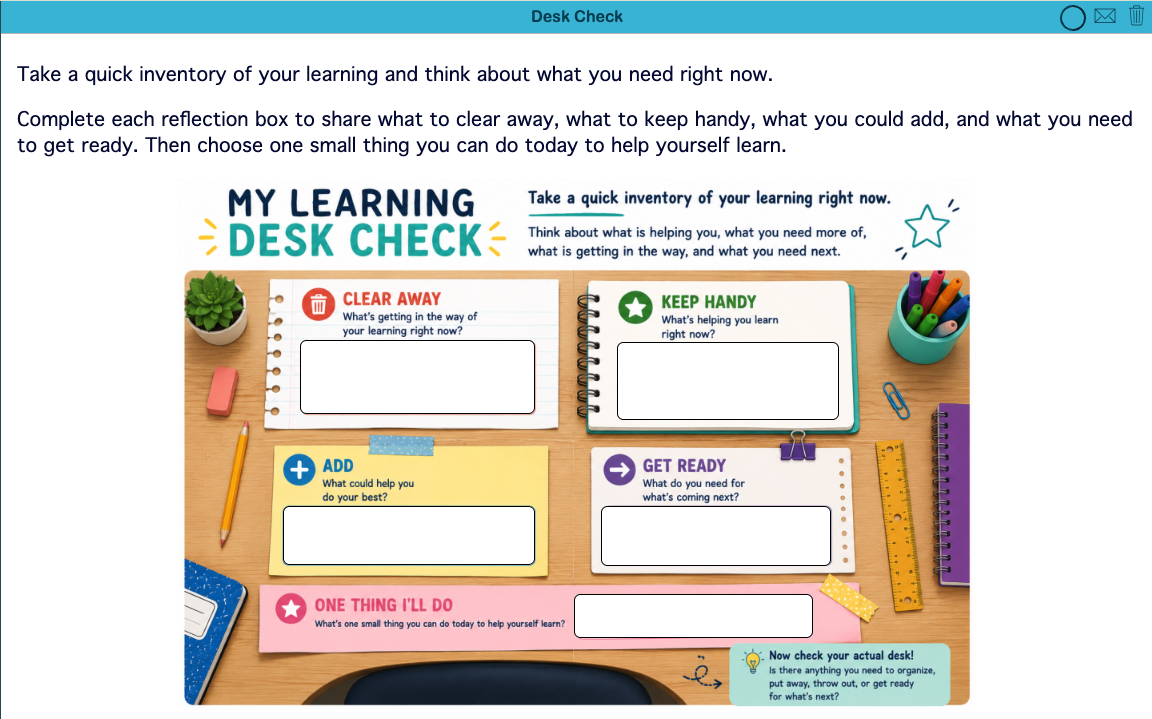
In this Annotate Picture question activity, students consider what to Clear Away, Keep Handy, Add, and Get Ready as they take inventory of their learning and workspace. They finish by choosing one small action they can take today, and teachers can pair the digital reflection with an actual desk check or clean-out.
Why this learning desk check supports SEL:
- Helps students identify what is supporting their learning and what may currently be getting in the way
- Connects organization and preparedness with self-management and learning readiness
- Moves students from reflection to action by asking them to choose one manageable step they can take today
15. Take Inventory with a Learning Locker Check
| Category | Details | |
|---|---|---|
| 🎓 | Grade level | Grades 3-12 |
| ⭐️ | Best for | Returning from breaks, weekly check-ins, advisory, homeroom, or anytime students need to reset |
| 🤝 | Interaction | Individual |
| ⏱️ | Time needed | 3-5 minutes |
| 🧩 | BookWidgets widget | Worksheet |
In this Annotate Picture question activity, students take inventory of their "learning locker" by deciding what to Keep, Add, Clean Out, and Grab. They identify what's working, what's getting in the way, what they may need next, and one small step they can take to move forward. Teachers can also pair the reflection with a physical locker clean-out.

Why this check-in supports SEL:
- Encourages students to take stock of what's working, what needs to change, and what they may need next
- Builds self-management as students identify useful strategies, resources, and supports
- Turns reflection into an actionable plan by asking students to choose one small step for moving forward
16. Check Your Progress with a Road Map Reflection
| Category | Details | |
|---|---|---|
| 🎓 | Grade level | Grades 3-12 |
| ⭐️ | Best for | Returning from breaks, midyear reflections, goal check-ins, advisory, or homeroom |
| 🤝 | Interaction | Individual |
| ⏱️ | Time needed | 3-5 minutes |
| 🧩 | BookWidgets widget | Worksheet |
In this Annotate Picture question activity, students pause to consider where they are on their learning journey. They identify what's going well, revisit their destination or goal, recognize a roadblock, and choose their next turn, including whether their original goal or route needs to change.
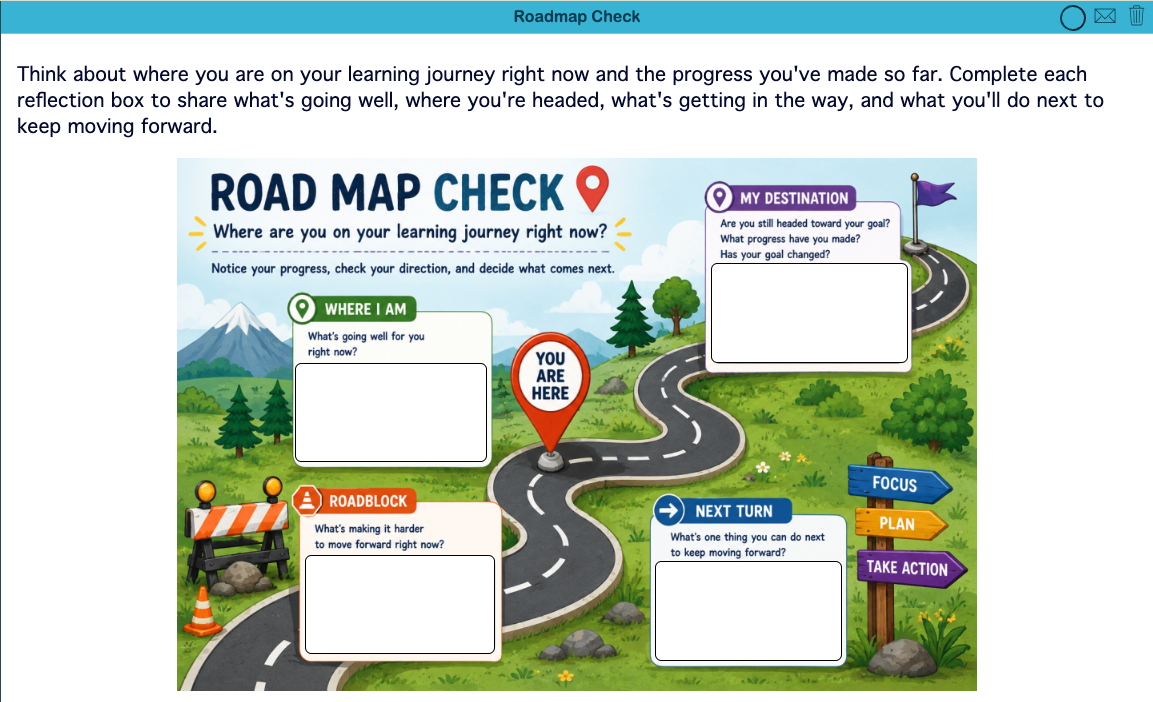
Why this road map check supports SEL:
- Encourages students to recognize progress and revisit the goal or destination they're working toward
- Develops responsible decision-making as students identify roadblocks and consider whether they need to adjust their route
- Moves students from reflection to action by asking them to determine an appropriate next step
17. Encourage Self-Reflection with Positive Affirmation Journaling
| Category | Details | |
|---|---|---|
| 🎓 | Grade level | Grades 4-12 |
| ⭐️ | Best for | Weekly reflection, advisory, SEL, or writing workshop |
| 🤝 | Interaction | Individual |
| ⏱️ | Time needed | 5–10 minutes |
| 🧩 | BookWidgets widget | Split Worksheet |
In this Split Worksheet widget activity, students spin for a randomly selected positive affirmation alongside guided journal prompts. They make personal connections to the affirmation, consider how they already demonstrate it, and identify how they could apply it in the future. A self-assessment rubric and optional voice recording add additional ways to reflect.

Why this activity supports SEL:
- Builds self-awareness by asking students to connect each affirmation to their own experiences, strengths, and growth
- Develops metacognition as students reflect on their responses and assess their own learning
- Creates an ongoing record of student reflection that teachers can use to support feedback and individual dialogue
💡 Want to build a daily affirmation routine? Positive affirmations have the greatest impact when they become a consistent classroom practice. Explore How to Strengthen Social-Emotional Learning with Daily Affirmation Routines for practical strategies and classroom ideas that help students develop confidence, resilience, and a positive mindset throughout the school year.
Quick Student Check-Ins for Projects and Assessments
Check-ins can also be tied to specific points in the learning cycle rather than a daily routine. Use these short reflections during individual or group projects and before assessments to help students evaluate their progress, identify challenges, communicate support needs, and prepare for their next step.
18. Help Students Stay on Track with a Project Progress Check-In
| Category | Details | |
|---|---|---|
| 🎓 | Grade level | Grades 4-12 |
| ⭐️ | Best for | Independent projects, research projects, writing assignments, or project-based learning |
| 🤝 | Interaction | Individual |
| ⏱️ | Time needed | 3-5 minutes |
| 🧩 | BookWidgets widget | Worksheet |
Long-term projects require students to manage their time, monitor their progress, and adjust their plans as challenges arise. In this Worksheet widget activity, students reflect on what they have accomplished, identify any obstacles, set goals for their next work session, and communicate any support they need from their teacher. This quick check-in promotes accountability while helping teachers identify students who may need additional guidance, resources, or encouragement to stay on track.
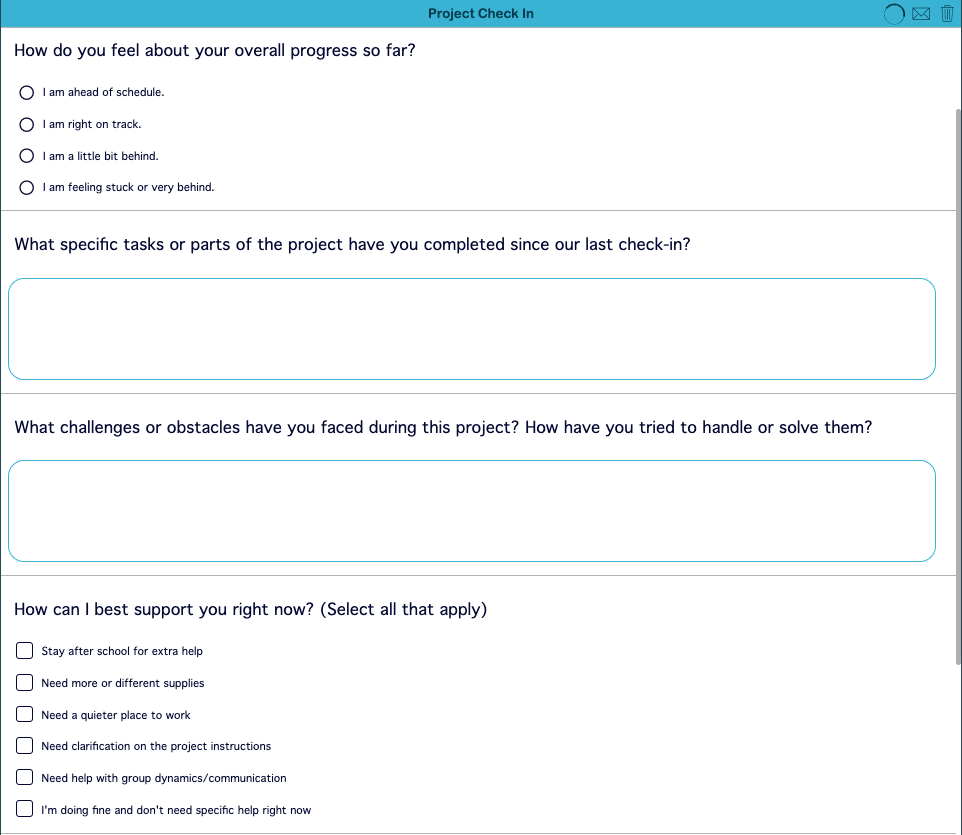
Why this project check-in supports SEL:
- Strengthens self-management as students monitor their progress and set a goal for their next work session
- Encourages students to identify roadblocks and communicate when they need help, feedback, or resources
- Gives teachers timely information they can use to provide targeted support before students fall behind
19. Keep Group Projects on Track with a Progress Check-In
| Category | Details | |
|---|---|---|
| 🎓 | Grade level | Grades 4-12 |
| ⭐️ | Best for | Multi-day group projects, collaborative learning, or project-based learning |
| 🤝 | Interaction | Individual reflection within project teams |
| ⏱️ | Time needed | 3-5 minutes |
| 🧩 | BookWidgets widget | Worksheet |
Successful group projects require more than dividing up the work—they depend on effective communication, collaboration, and regular reflection. In this Worksheet widget activity, students individually evaluate their group's progress, reflect on their own contributions, identify challenges, and describe how their teacher can best support the team. By collecting individual responses instead of a single group submission, teachers gain honest insight into group dynamics and can identify communication issues, uneven participation, or project roadblocks before they become bigger problems.
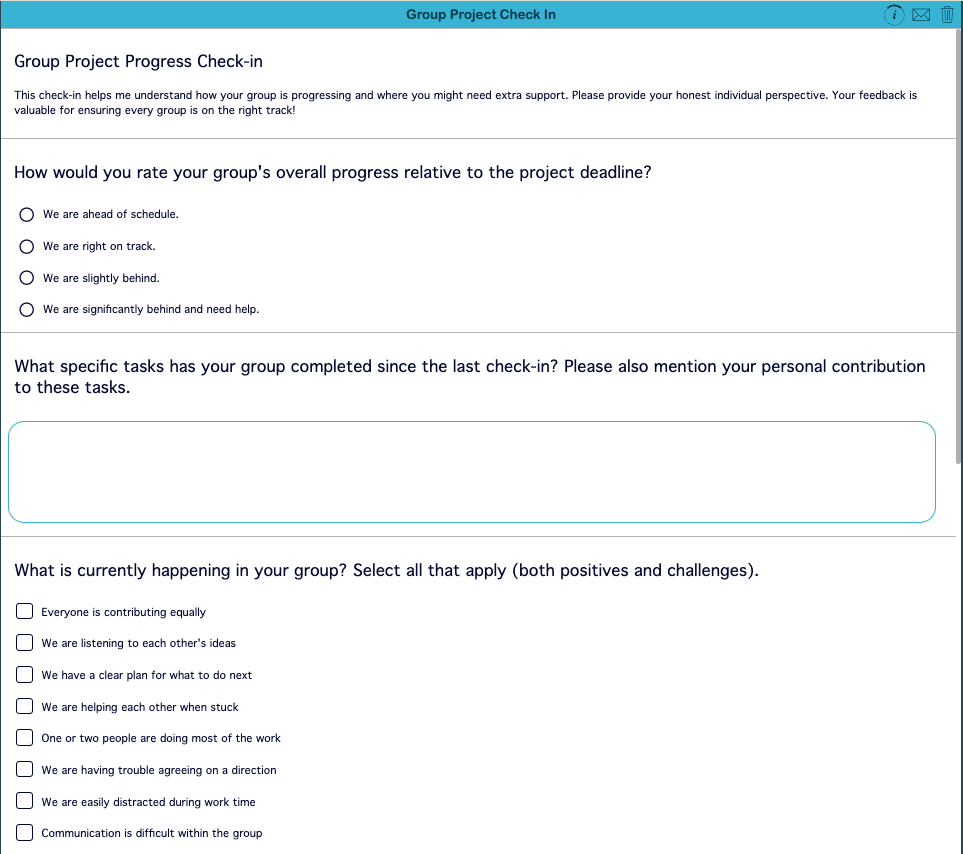
Why this project check-in supports SEL:
- Builds self-awareness as students reflect on their own contribution to the group's progress
- Strengthens relationship skills by prompting students to consider teamwork, communication, and shared challenges
- Gives teachers individual perspectives on group dynamics, making it easier to identify uneven participation, communication issues, or roadblocks
20. Reduce Test Anxiety with a Test or Exam Readiness Rubric
| Category | Details | |
|---|---|---|
| 🎓 | Grade level | Grades 4-12 |
| ⭐️ | Best for | Before quizzes, tests, or exams |
| 🤝 | Interaction | Individual |
| ⏱️ | Time needed | 3-5 minutes |
| 🧩 | BookWidgets widget | Worksheet |
Academic success depends on more than knowing the content—it also depends on students feeling mentally prepared to demonstrate what they know. In this Worksheet widget activity, students complete a Test or Exam Readiness Rubric to reflect on their preparedness, confidence, focus, and stress level before beginning an assessment. They then write a personal reminder or piece of advice to themselves, helping them shift their attention from anxiety to productive test-taking strategies. This brief, non-graded check-in encourages students to pause, self-assess, and enter the exam with greater confidence while giving teachers insight into students who may need reassurance or support.
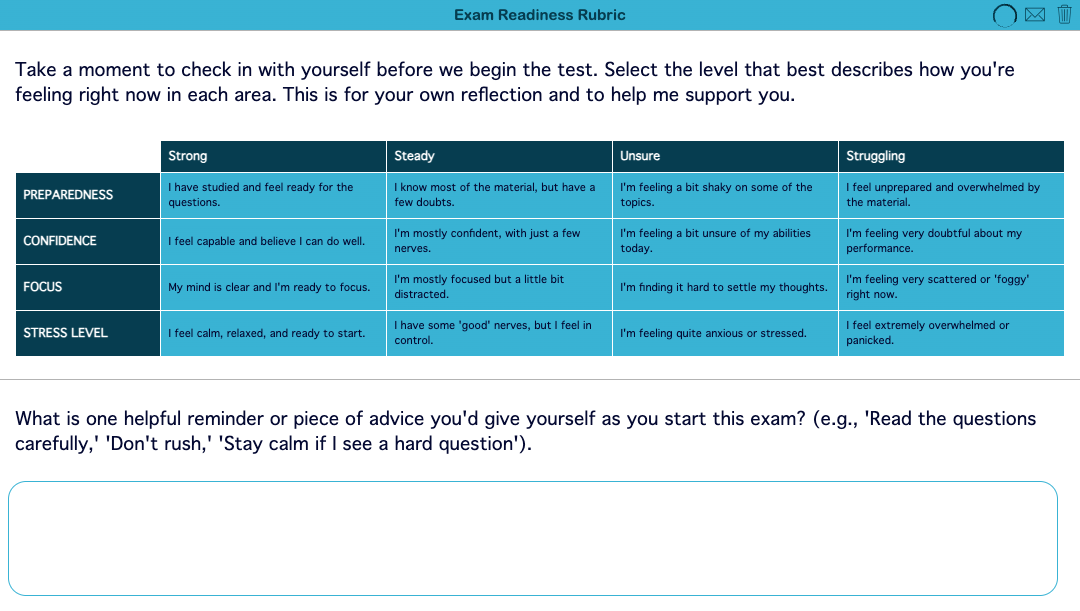
Why this exam readiness check-in supports SEL:
- Helps students recognize their current preparedness, confidence, focus, and stress level before an assessment
- Encourages self-management by shifting attention toward strategies, reminders, and actions students can control
- Alerts teachers to students who may benefit from reassurance or additional support before beginning the assessment
💡 Preparing for an upcoming assessment? Start by checking what students already know with a quick pre-assessment, then create an engaging, secure digital exam that supports meaningful learning. Explore 5 Ready-to-Use ELL Pre-Assessment Activities for a Perfect Start of the School Year for classroom-ready pre-assessment ideas, then learn how to build secure, AI-enhanced assessments in How to Create Secure AI-Enhanced Digital Exams with BookWidgets.
Make SEL Check-Ins Part of Your Classroom Practice
SEL check-ins can serve different purposes at different points in the school year and learning cycle. A back-to-school reflection can help you get to know students and understand what they need from the start. A quick readiness check can become a recurring classroom routine, while a project reflection or assessment check-in can help students pause, evaluate their progress, and communicate what they need before moving forward.
The 20 activities in this collection give students opportunities to practice self-awareness, self-management, relationship skills, responsible decision-making, and social awareness while giving teachers actionable information about students' goals, readiness, challenges, and support needs. Some activities are designed for a specific classroom moment, while others can be reused throughout the school year. With reusable BookWidgets check-ins, students can clear their answers and submit the same activity again, with each submission receiving its own timestamp.
Choose a check-in that fits the moment, share it with your students, or copy it to your BookWidgets account to customize the prompts for your students. You can also browse the complete BookWidgets SEL Check-Ins collection to find an activity for your next morning meeting, advisory period, classroom transition, project work session, or assessment.
If you create your own SEL check-ins with BookWidgets, we'd love to see them! Share your ideas with the BookWidgets Teacher Community or tag us on social media.
Frequently Asked Questions About SEL Check-Ins
What is an SEL check-in?
An SEL check-in is a short activity that gives students an opportunity to reflect on their readiness, goals, needs, progress, emotions, or learning strategies. Check-ins can help teachers learn more about students while supporting social-emotional learning skills such as self-awareness, self-management, relationship skills, and responsible decision-making.When can teachers use SEL check-ins?
Teachers can use SEL check-ins at different points in the school year and learning cycle. They work well during back-to-school activities, morning meetings, advisory or homeroom, at the beginning of class, during transitions, after school breaks, during projects, before assessments, or at the end of a lesson.What is a quick SEL check-in to use after a school break?
A Learning Battery Check, Traffic Light Reflection, Learning Desk Check, Learning Locker Check, or Road Map Reflection can all be used after a school break. These activities help students consider their current readiness or progress, identify what they need, and determine a next step.How long should an SEL check-in take?
Many quick SEL check-ins can be completed in about 3–5 minutes. Back-to-school reflections and journaling activities may take longer, while discussion-based check-ins can be adjusted depending on the lesson format.Can teachers reuse the same BookWidgets SEL check-in?
Yes. Teachers do not need to create a new copy each time. Students can clear their previous answers and complete the same BookWidgets check-in again, and each submission receives its own unique timestamp.Are these BookWidgets SEL check-ins ready to use?
Yes. Teachers can open each activity from the image or caption, explore it, copy it to their BookWidgets account, and customize the questions, prompts, or grade level for their students.Can I use these SEL check-ins in Google Classroom or another LMS?
Yes. BookWidgets activities can be shared through learning management systems including Google Classroom, Microsoft Teams, Canvas, Moodle, and Schoology. Student responses can be reviewed in the BookWidgets grading dashboard.
Explore More with BookWidgets
Want to keep exploring what you can do with BookWidgets?
✔️ Sign up for upcoming free webinars and view recordings on the BookWidgets Teacher Academy.
✔️ Follow BookWidgets on BlueSky and LinkedIn, and join our Facebook teacher community to exchange ideas and connect with educators from around the world.
✔️ I'd also love to connect with you! Follow me on BlueSky, Facebook, or LinkedIn for more classroom ideas and BookWidgets inspiration.


