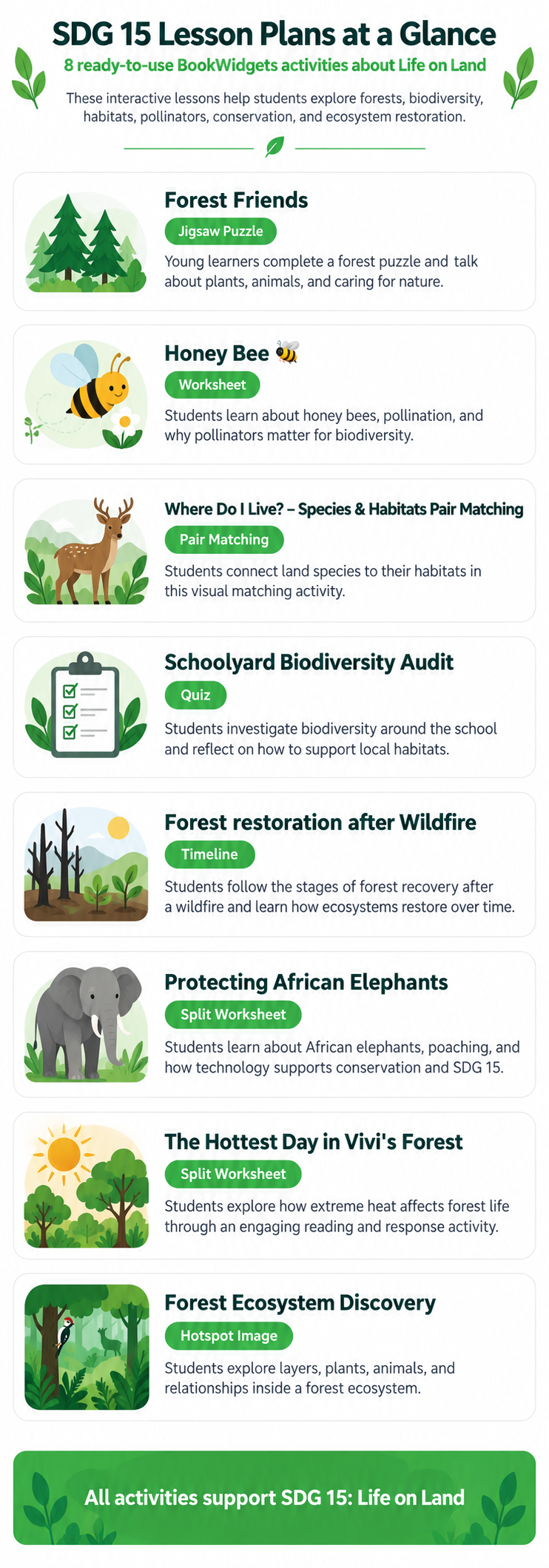
8 Inspiring SDG 15 Lesson Plans for Teaching Life on Land
 Lucie Renard —
SDG 15, Life on Land, focuses on protecting, restoring, and sustainably using ecosystems on land. It covers important classroom topics such as forests, biodiversity, deforestation, land degradation, desertification, endangered species, invasive species, and ecosystem restoration.
For teachers, SDG 15 is a powerful topic because students can connect large environmental challenges to places and living things they already know. A forest near their home, the insects in the school garden, the wood used to make a desk, or an endangered animal they recognize can all become starting points for discussing biodiversity and our responsibility toward life on land.
💡 💡 With BookWidgets, you can turn SDG 15 into interactive digital lessons students can complete individually, in pairs, or as part of a project. Use the lesson ideas below as templates you can adapt to your students and share through Google Classroom, Microsoft Teams, Canvas, Moodle, or another LMS. You can find them together in this free BookWidgets group on SDGs.
Make sure to keep an eye on our other SDG lesson resources below where we share ready-to-use activities for teaching all 17 Sustainable Development Goals.
Now, let’s dig into these Life on Land teaching resources! 🌱
Ready-to-use BookWidgets lessons in this post
This post includes 8 interactive BookWidgets lesson ideas for teaching SDG 15: Life on Land. The activities cover different grade levels, from kindergarten and primary school to middle and high school. Teachers can use the activities to explore forests, biodiversity, endangered species, deforestation, desertification, ecosystem restoration, and local environmental action. You can copy them to your BookWidgets account, adapt them to your students' needs, and share them immediately through a link, or even better, through your LMS.
- Match animals to their habitats with this SDG 15 BookWidgets Pair Matching activity — Primary students connect land species to the habitats they need to survive.
- Explore a forest ecosystem with this interactive BookWidgets Hotspot Image — Students investigate the layers, plants, animals, and relationships inside a forest ecosystem.
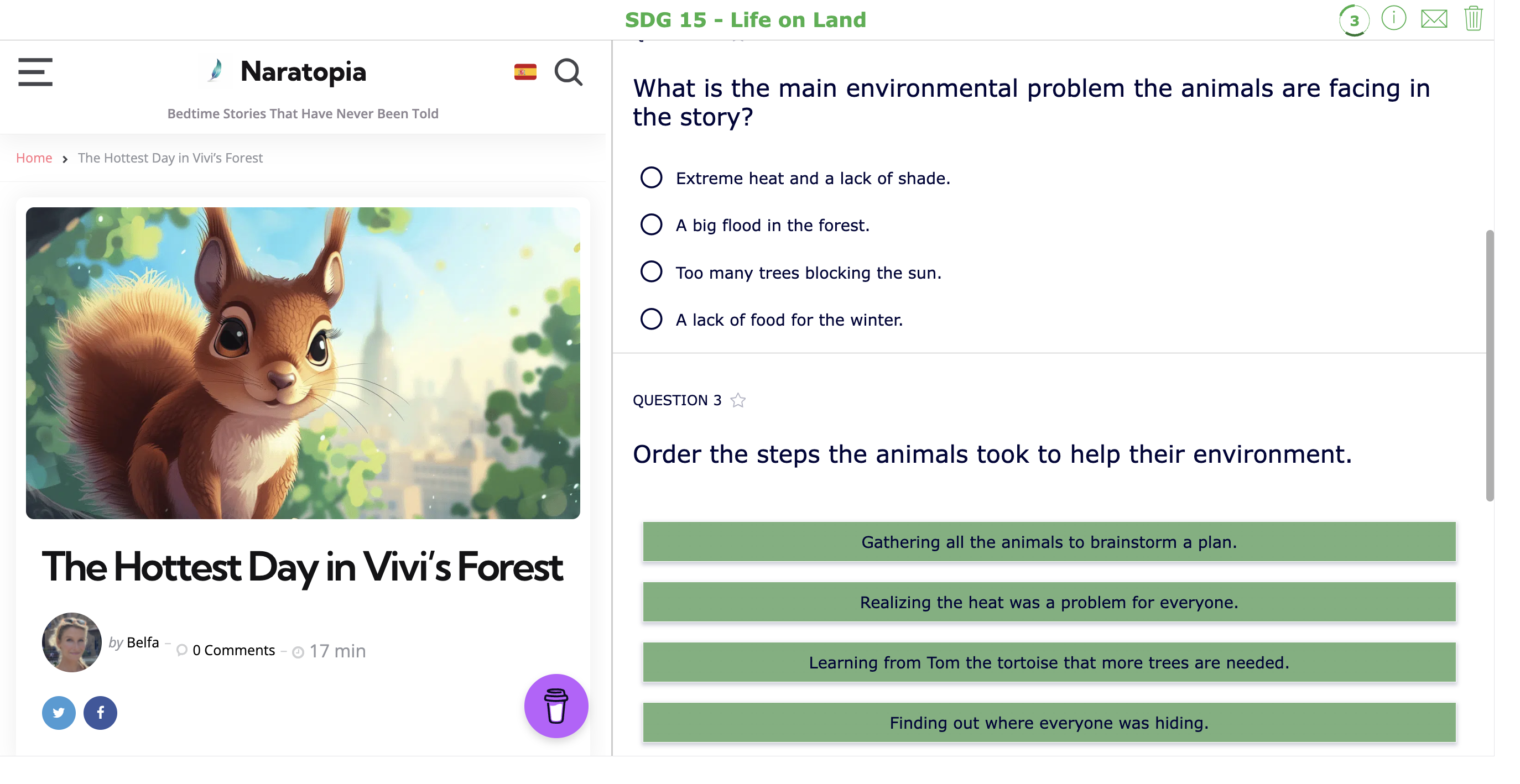
- Open this comprehensive SDG 15 reading activity for primary school students — Through Vivi the squirrel’s story, students explore extreme heat, forest habitats, reforestation, and protecting terrestrial ecosystems.
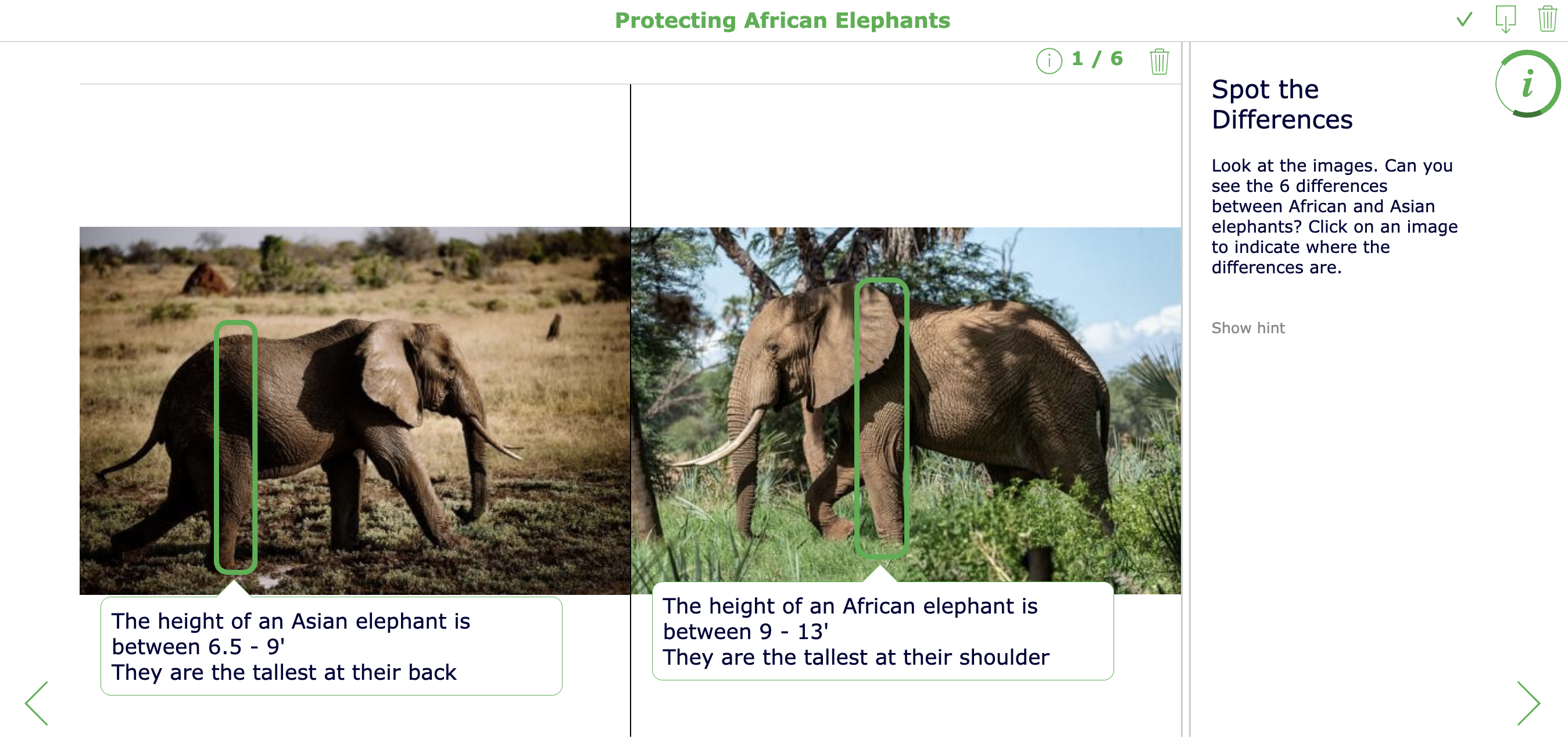
- Open this interactive multimedia quiz about protecting African elephants — Middle school students learn about elephants, poaching, wildlife rangers, and how technology supports conservation and SDG 15.
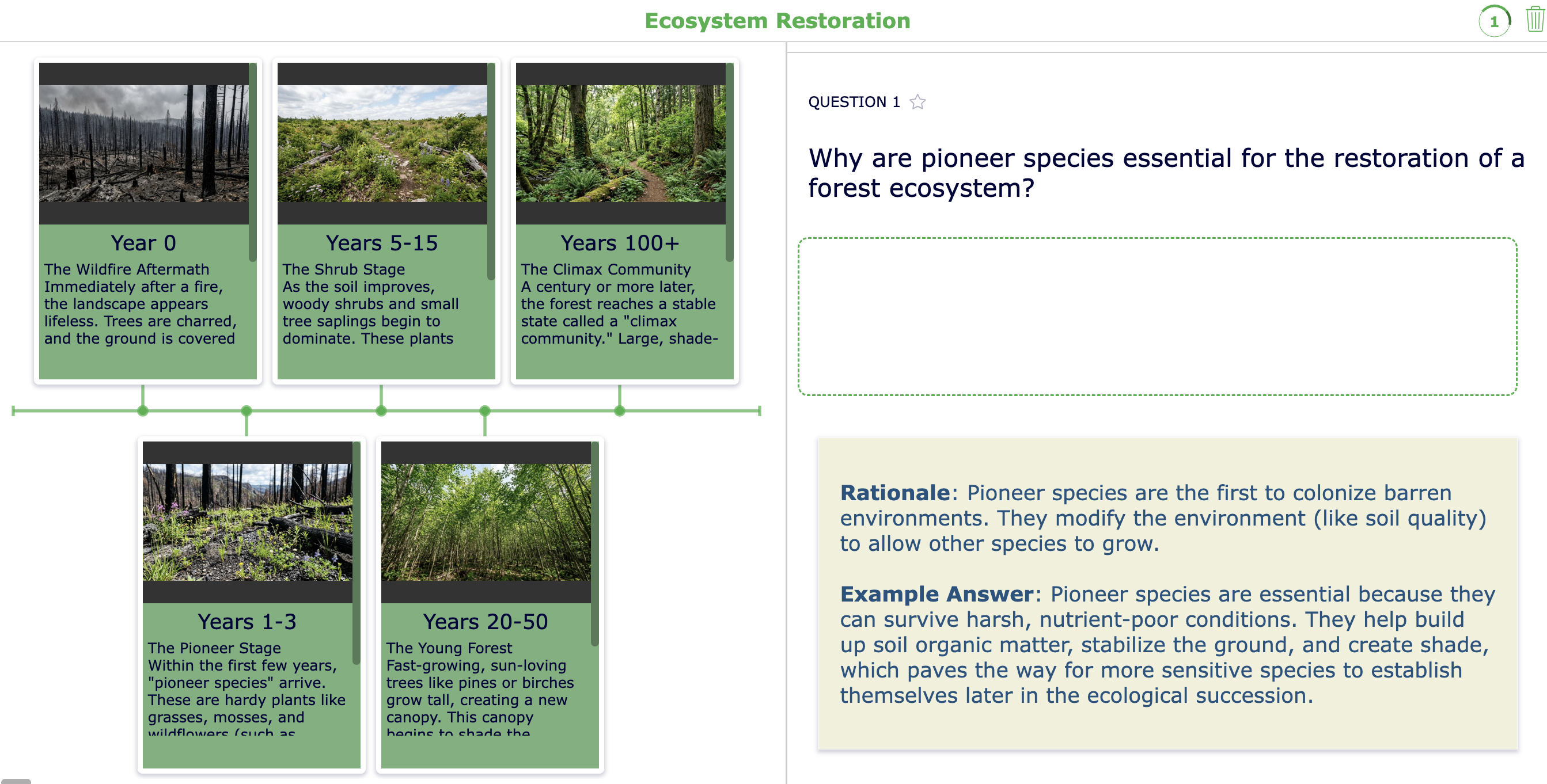
- Explore forest restoration after a wildfire with this BookWidgets Timeline activity — High school students follow ecological succession and discover how forest ecosystems recover over time.
- Open this multimedia quiz about protecting the honey bee — Students learn about bee biology, pollination, biodiversity, threats to pollinators, and ways to protect them.
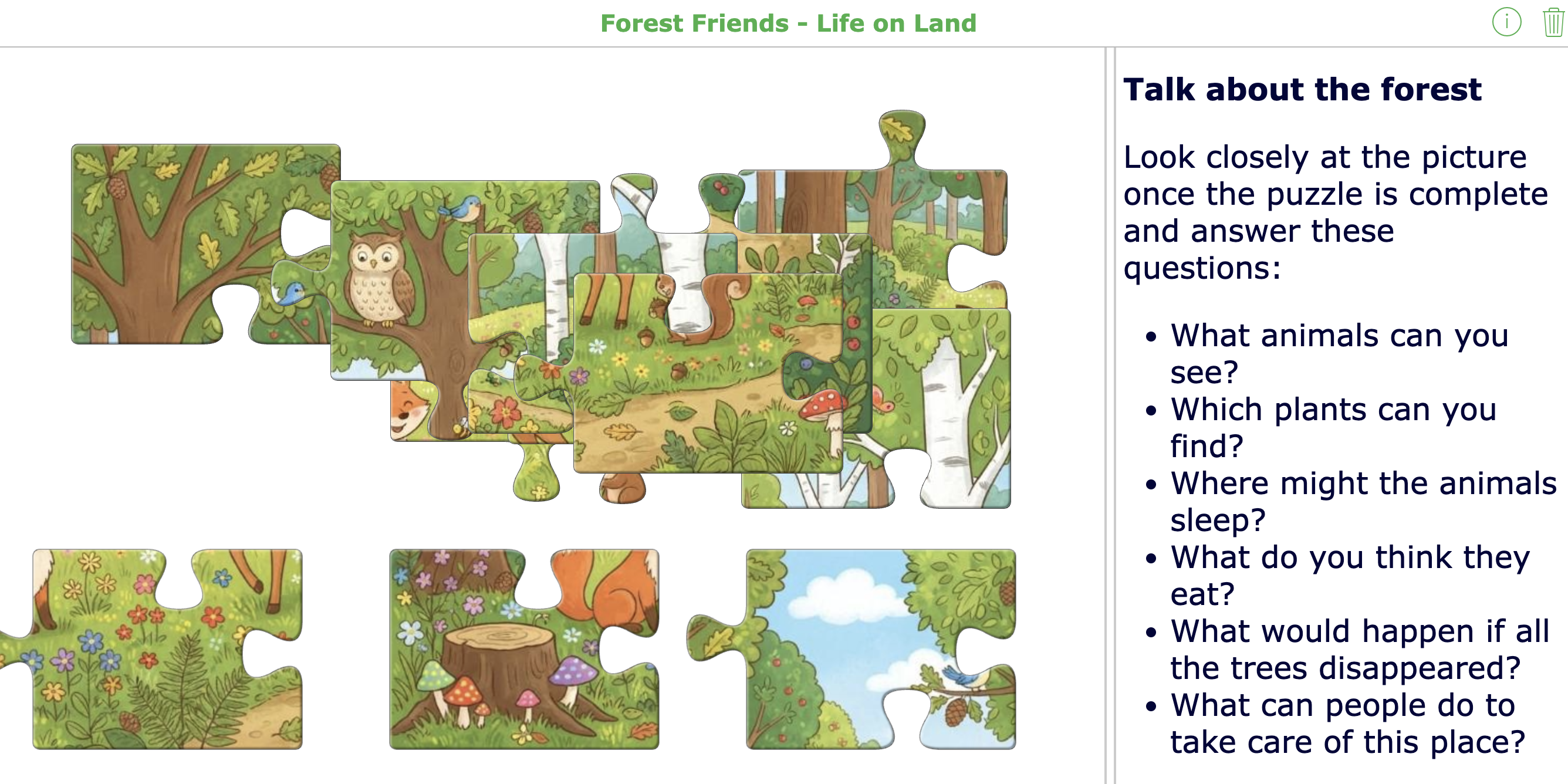
- Start an SDG 15 conversation with this Forest Friends Jigsaw Puzzle — Young learners observe a forest scene and talk about plants, animals, habitats, and caring for nature.
- Carry out a schoolyard biodiversity audit with this BookWidgets Quiz — Students investigate biodiversity around their school, document evidence, identify areas for improvement, and propose a realistic sustainability action.
What is SDG 15: Life on Land?
SDG 15: Life on Land is one of the 17 Sustainable Development Goals created by the United Nations. The goal focuses on protecting and restoring terrestrial ecosystems, sustainably managing forests, combating desertification and land degradation, and stopping biodiversity loss.
In simpler terms, SDG 15 is about protecting the plants, animals, soils, forests, and other ecosystems found on land, and restoring nature where it has been damaged.
This goal includes classroom topics such as:
- forests and deforestation;
- biodiversity and ecosystems;
- threatened and endangered species;
- habitats and habitat loss;
- desertification and land degradation;
- healthy soil;
- mountain ecosystems;
- invasive species;
- wildlife conservation;
- ecosystem restoration;
- sustainable use of natural resources.
Review this checklist, which outlines all the target goals for SDG 15.
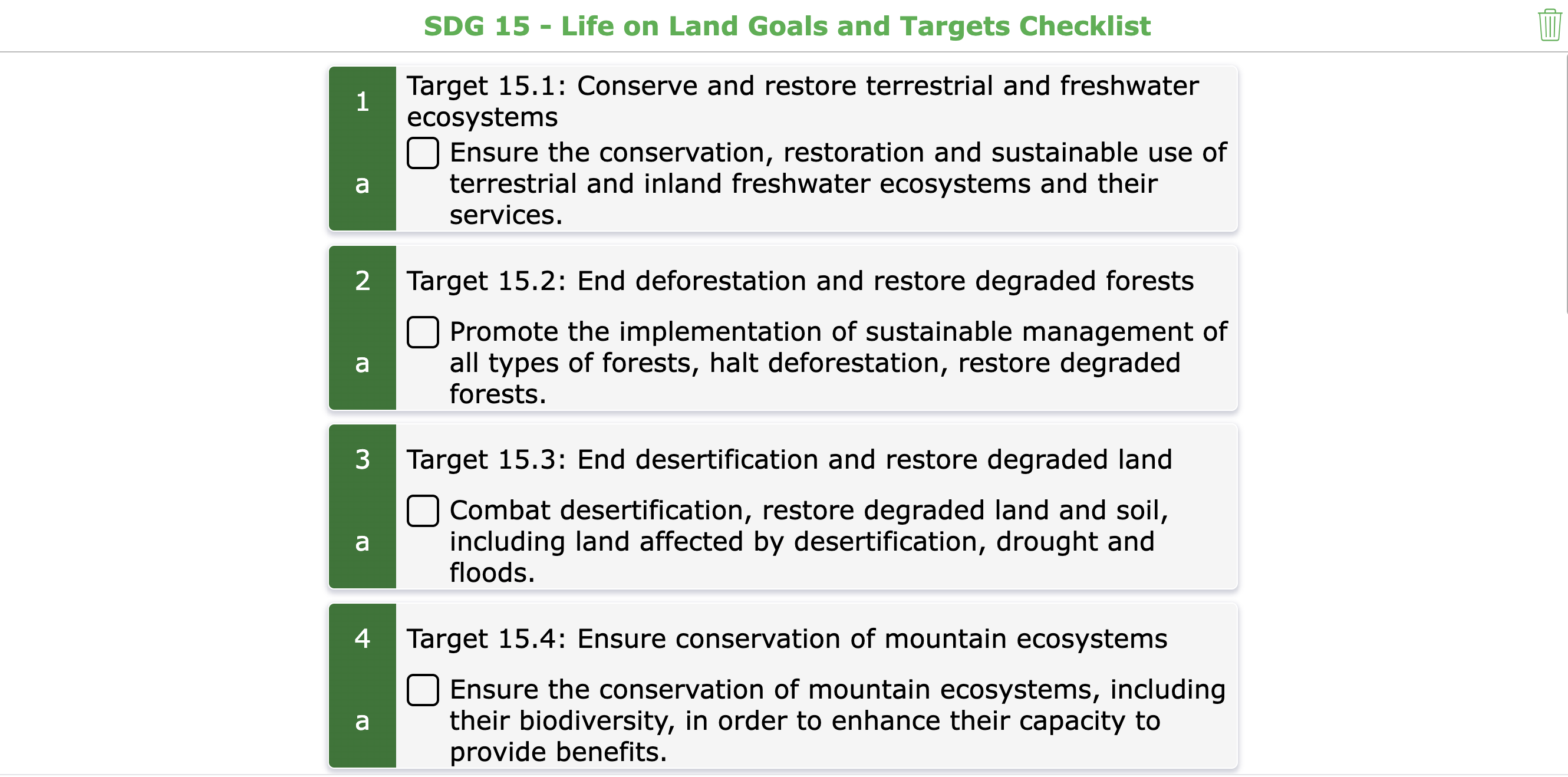
For students, SDG 15 can be explained like this: SDG 15: Life on Land is a global goal that asks people, governments, and organizations to protect plants, animals, forests, soil, and other ecosystems on land. It encourages us to stop destroying habitats, protect biodiversity, restore damaged nature, and use land and natural resources responsibly so that life on Earth can thrive in the future.
Why Should Teachers Include SDG 15 in Their Lessons?
Teaching SDG 15 helps students understand that biodiversity is not an abstract environmental concept. Every living thing is part of an ecosystem, and changes to one part of that ecosystem can affect many others.
Students can investigate cause and effect through concrete examples. What happens to a food web when a species disappears? Why can cutting down a forest affect soil, water, animals, and people? What happens when an invasive species enters an ecosystem? Can degraded land become healthy again?
SDG 15 also works well across subjects.
- Science and biology teachers can explore ecosystems, food webs, biodiversity, plant biology, soil, habitats, and species conservation.
- Geography teachers can investigate forests, land use, desertification, mountain ecosystems, deforestation, and differences between regions.
- Social studies and citizenship teachers can discuss natural resource use, conservation policies, responsibility, environmental justice, and how communities balance economic and ecological needs.
- Language teachers can use endangered species, deforestation, or land restoration as topics for research, persuasive writing, presentations, debates, and awareness campaigns.
With BookWidgets, students can do more than read about Life on Land. They can explore an interactive forest image, match species to habitats, analyze a food web, compare degraded and healthy land, investigate endangered species through a WebQuest, or carry out a biodiversity audit around their own school.
8 Free and Interactive Lesson Ideas to Teach SDG 15 – Life on Land
Below are 8 BookWidgets lesson ideas to help students explore SDG 15 from different perspectives. Choose the activities that best match your students, curriculum, and the widgets you want to create.
1. Where Do I Live? Pair Matching
| Icon | Area | Explanation |
|---|---|---|
| 🎓 | Subject & Grade | Science and environmental education - primary school |
| 🎯 | Learning goal | Students connect different land species to the habitats they need to survive. |
| 🧩 | BookWidgets widget type | Pair Matching |
| ⏱️ | Time needed | 10–15 minutes |
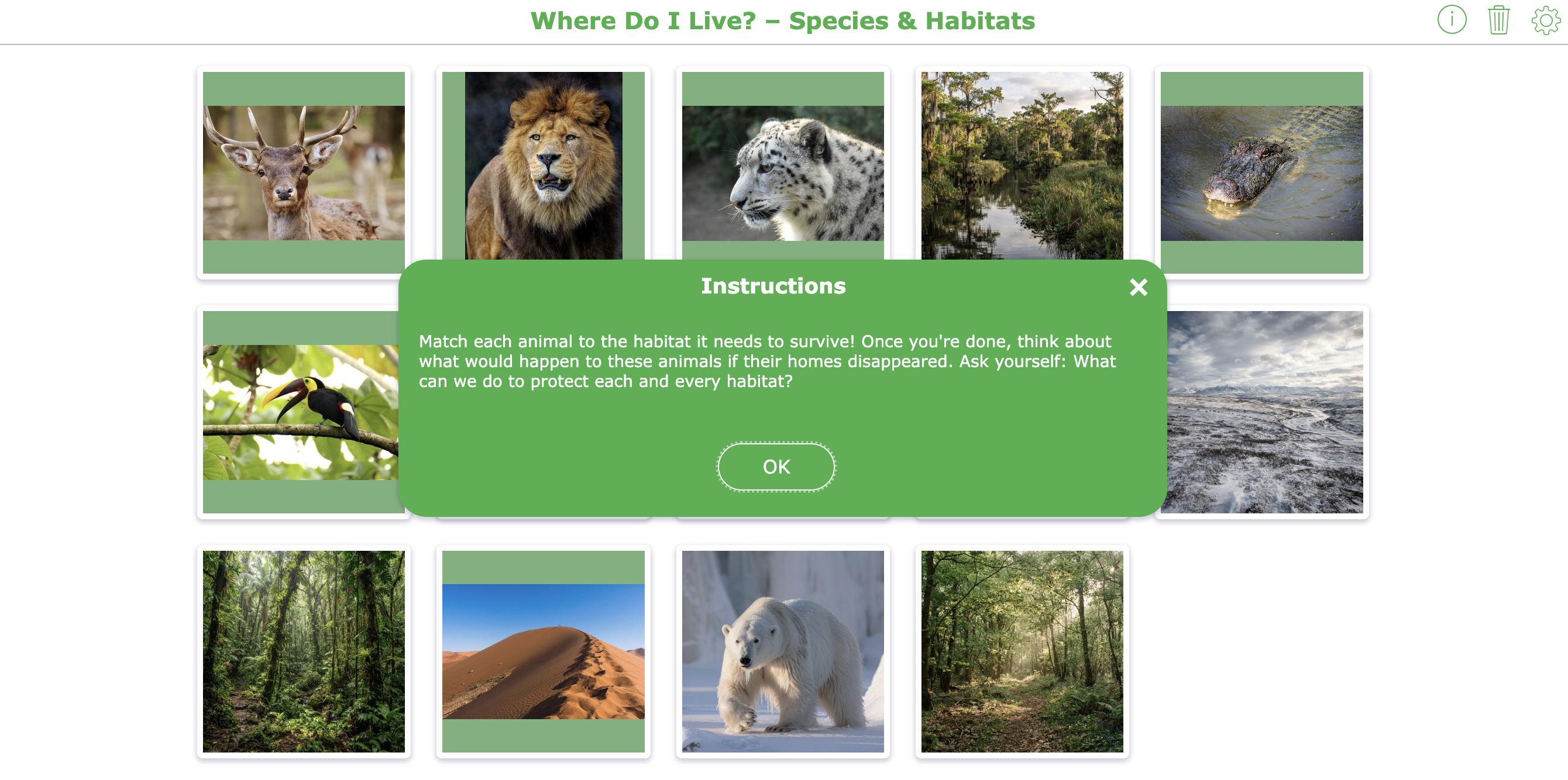
A habitat is much easier to understand when students can connect it to an animal that actually lives there. In this Species & Habitats Pair Matching activity, students match animals to habitats such as a tropical rainforest, grassland, wetland, mountain, desert, woodland, or tundra.
You can use photographs instead of only words, making the activity accessible for younger students and language learners. After completing the matching activity, ask students a bigger SDG 15 question: What would happen to each animal if its habitat disappeared? And what can we do to protect their habitats?
That simple follow-up turns a game into a conversation about habitat loss and biodiversity.
2. Inside a Forest Ecosystem – Hotspot Image
| Icon | Area | Explanation |
|---|---|---|
| 🎓 | Subject & Grade | Science and biology — upper primary to middle school |
| 🎯 | Learning goal | Students identify different parts of a forest ecosystem and explain how plants, animals, and environmental conditions are connected. |
| 🧩 | BookWidgets widget type | Hotspot Image |
| ⏱️ | Time needed | 15–25 minutes |
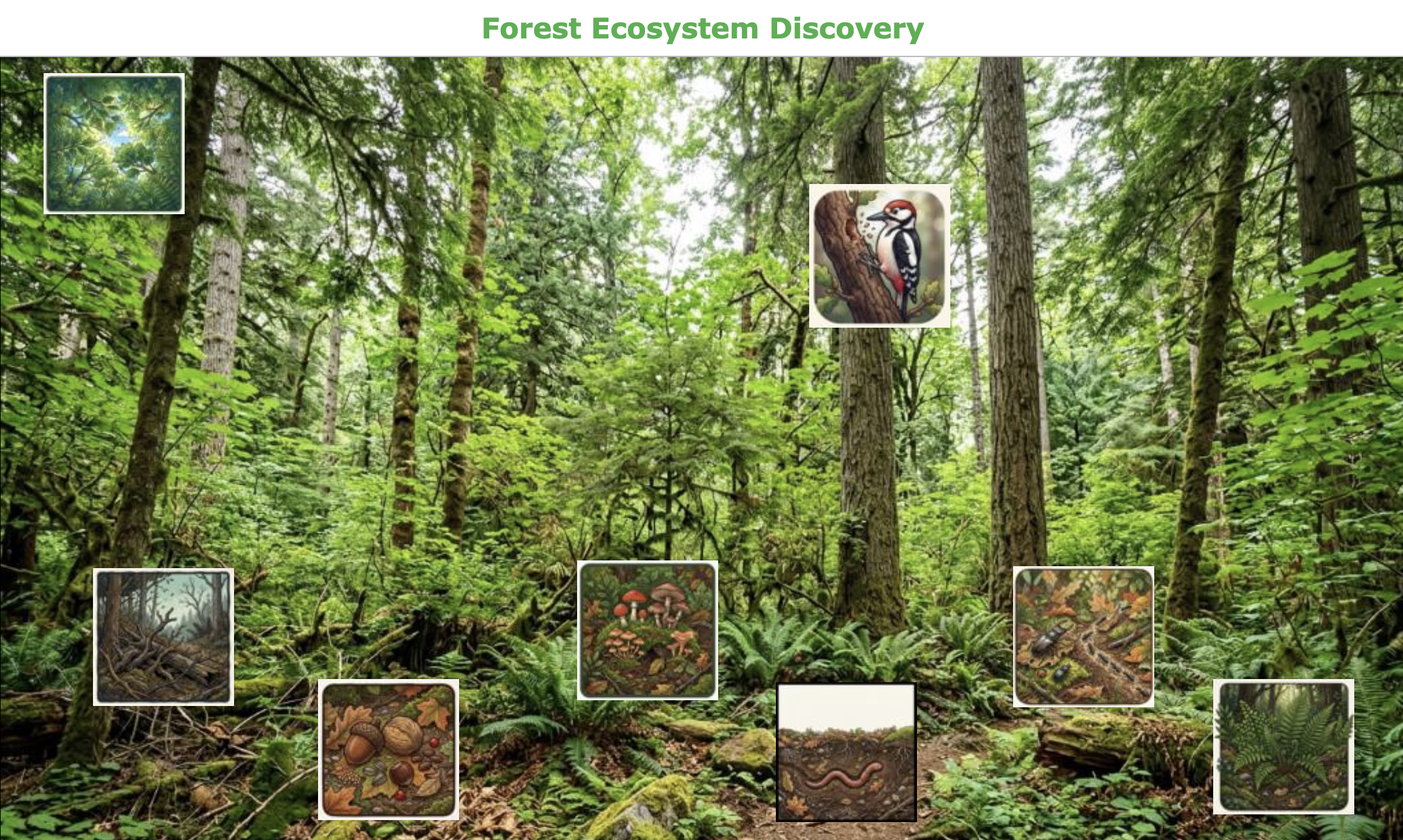
Turn one detailed forest image into an interactive ecosystem students can explore. Place hotspots on different parts of the forest: the soil, forest floor, tree trunks, understory, canopy, dead wood, insects, birds, fungi, mammals, and plants. When students select a hotspot, they discover a short fact, image, audio fragment, question, or video about that part of the ecosystem.
For example, a hotspot on a fallen tree could explain why dead wood provides food and shelter for other organisms. A hotspot in the soil could introduce decomposers. Another could show how the forest canopy creates a habitat very different from the forest floor. Instead of learning about an ecosystem as a vocabulary list, students visually investigate the relationships inside one.
3. The Hottest Day in Vivi's Forest - Quiz
| Icon | Area | Explanation |
|---|---|---|
| 🎓 | Subject & Grade | Science and environmental education - Primary school |
| 🎯 | Learning goal | Students identify the core mission of SDG 15: Protecting, restoring, and promoting the sustainable use of terrestrial ecosystems. |
| 🧩 | BookWidgets widget type | Quiz |
| ⏱️ | Time needed | 45–60 Minutes |
This interactive lesson introduces young students to Sustainable Development Goal 15: Life on Land. Through the engaging "Naratopia" story featuring Vivi the squirrel, students explore the real-world impact of climate change (extreme heat) on forest habitats and the vital role of reforestation and community cooperation in protecting our ecosystems.
4. Protecting our Elephants - Multimedia Quiz
| Icon | Area | Explanation |
|---|---|---|
| 🎓 | Subject & Grade | Sustainability, biology, or geography - middle school |
| 🎯 | Learning goal | Students learn how technology and human effort (wildlife rangers) contribute to the conservation of biodiversity and the achievement of SDG 15. The focus is on protecting elephants from poaching and managing human-elephant conflicts. |
| 🧩 | BookWidgets widget type | Quiz, Spot the Difference, Flashcards |
| ⏱️ | Time needed | 40-50 minutes |
In this interactive elephant lesson, students learn about African and Asian elephants through engaging background information, visuals, and a ranger’s story about poaching. They then test their knowledge by sorting characteristics and images of both elephant species. To finish, students answer an open-ended question about how technologies such as GPS collars and thermal cameras help rangers protect elephants and support SDG 15: Life on Land by preserving terrestrial ecosystems and biodiversity.
5. Restoring Ecosystems Takes Time - Timeline Quiz
| Icon | Area | Explanation |
|---|---|---|
| 🎓 | Subject & Grade | Biology, Geography - High School |
| 🎯 | Learning goal | Students explore how forest ecosystems restore themselves after a wildfire. |
| 🧩 | BookWidgets widget type | Timeline & Quiz |
| ⏱️ | Time needed | 25–35 minutes |
This lesson provides an in-depth exploration of SDG 15 (Life on Land), focusing on the intricate dynamics of forest ecosystems. Students will explore the stages of ecological succession, learning how life returns to degraded landscapes and the vital role biodiversity plays in maintaining a healthy planet. The module combines scientific theory with critical reflection on human impact and global sustainability targets.
6. Honey Bee – Quiz
| Icon | Area | Explanation |
|---|---|---|
| 🎓 | Subject & Grade | Biology, environmental science - Middle School |
| 🎯 | Learning goal | Students learn about the critical role of honey bees in maintaining biodiversity. |
| 🧩 | BookWidgets widget type | Multimedia Quiz |
| ⏱️ | Time needed | 35–50 minutes |
This interactive lesson explores the vital relationship between honey bees and Sustainable Development Goal 15, "Life on Land."
Students begin by learning about bee anatomy and the hive's social structure through engaging narrative and labeling tasks. The curriculum then connects biological pollination to global food security and the maintenance of diverse terrestrial ecosystems. By analyzing modern threats like habitat loss and pesticides, learners gain a critical understanding of why pollinator populations are declining. Finally, the lesson empowers students to propose their own conservation strategies to protect these essential insects in their local environments.

7. Forest Friends - Jigsaw Puzzle
| Icon | Area | Explanation |
|---|---|---|
| 🎓 | Subject & Grade | Early childhood education, science, and speaking skills - kindergarten and early primary |
| 🎯 | Learning goal | Children observe a forest scene, identify living things, and talk about why plants and animals need a safe place to live. |
| 🧩 | BookWidgets widget type | Jigsaw Puzzle |
| ⏱️ | Time needed | 10–20 minutes |
SDG 15 does not have to begin with words like biodiversity and deforestation. For very young learners, start with a forest picture.
Students complete a Forest Friends Jigsaw Puzzle showing trees, flowers, insects, birds, mammals, fungi, or other living things. Once the picture is complete, use it as a conversation starter. The activity builds early environmental awareness through observation and conversation rather than abstract explanations.
8. Schoolyard Biodiversity Audit - Quiz
| Icon | Area | Explanation |
|---|---|---|
| 🎓 | Subject & Grade | Early childhood education, science, and speaking skills — kindergarten and toddlers |
| 🎯 | Learning goal | Students conduct a practical audit of the school grounds to map and evaluate local biodiversity. |
| 🧩 | BookWidgets widget type | Quiz |
| ⏱️ | Time needed | 40–50 minutes |
Students explore the schoolyard to observe and document local flora and fauna in a table.
- They act as environmental auditors by capturing photographic evidence of biodiversity.
- They identify and photograph existing conservation measures and educational signage.
- They pinpoint a specific green zone that requires ecological restoration or improvement.
- They propose a realistic action plan to enhance the school’s sustainability efforts.

More ready-to-use SDG lesson plans and resources
Reminder: This is part ten of our blog post series with lesson activities for teaching the United Nations Sustainable Development Goals. We will post a new blog about the next SDG every month. Go check out earlier blog posts on the SDGs:
- 8 Engaging Lesson Plans to Teach "SDG 1: No Poverty" to Your Students
- 8 Creative Ways to Teach "SDG 2: Zero Hunger" to Your Students
- 8 Free Lesson Plans to Teach "SDG 3: Good Health and Well-Being"
- Bringing SDG 4 into the Classroom: 8 Lesson Ideas for Quality Education
- 8 Free Lesson Plans on SDG 5 Gender Equality for all Grade Level Students
- 8 Free Digital Lessons for Teaching SDG 6: Clean Water and Sanitation
- 8 Exciting Lesson Ideas to Teach Students About SDG 7: Affordable and Clean Energy
- 8 Digital Lessons to Teach Students about SDG 8: Decent Work and Economic Growth
- 8 Creative Ways to Teach SDG 9 - Infrastructure, Industrialization and Innovation - in Your Classroom
- SDG 10 Explained for Students: 8 Digital Lesson Plans on Reduced Inequalities
- Bringing SDG 11 into the Classroom: 8 Lesson Ideas for Sustainable Cities & Communities
- 8 Creative Lesson Plans to Teach SDG 12: Responsible Consumption & Production
- 8 Digital Lessons on SDG 13 to Engage Students with Climate Change
- 8 Creative SDG 14 Lesson Plans for Teaching Life Below Water
And if you can't wait this long for all the other posts, we've already created 1 lesson for each SDG in this digital group work planner activity. Here's the blog post about teaching the SDGs. You can find all the separate SDG activities in this BookWidgets group folder, in case you want to duplicate the activities and make some changes.
Wrap up
Teaching SDG 15: Life on Land helps students understand how closely people, plants, animals, soil, and ecosystems are connected.
From deforestation and endangered species to desertification and biodiversity loss, SDG 15 gives students real environmental challenges to investigate. But it also gives teachers the opportunity to explore solutions such as conservation, sustainable land use, habitat protection, and ecosystem restoration. Your students will not only learn what SDG 15 means. They will start seeing Life on Land in the ecosystems, species, and natural spaces around them — and consider what they can do to help protect them.
With BookWidgets, you can turn those ideas into interactive digital lessons students actively explore instead of only reading about them. Once the activities are created, copy the BookWidgets lessons to your account, adapt them to your students’ level, and share them through your LMS. You can find all the SDG 15 lesson activities in this BookWidgets group.
Want to learn more about creating engaging lesson activities with BookWidgets?
✔️ Sign up for upcoming free webinars and view recordings on the BookWidgets Teacher Academy Page.
✔️ Follow BookWidgets on BlueSky and LinkedIn and join our teacher community on Facebook!
And me? I'm Lucie from BookWidgets. Follow me on LinkedIn 👋