
55 Daily Affirmation Activities for the Classroom to Support SEL All Year
 Kate Baker —
Build a Yearlong SEL Routine with 55 Ready-to-Use Daily Affirmation Activities
Looking for meaningful daily affirmation activities to strengthen social-emotional learning (SEL) and build a positive classroom environment? This post features five flexible BookWidgets affirmation activity sets with 55 ready-to-use digital affirmations for students that help build confidence, resilience, and a sense of belonging throughout the school year.
Whether you're welcoming students back to school, celebrating Thanksgiving, resetting after winter break, or simply checking in each week, these classroom affirmations fit naturally into your routine. Use them as bellringers, brain breaks, morning meetings, or end-of-day reflections. Keep reading to discover why daily affirmations matter, how to build an effective affirmation routine, and practical tips for giving students voice and choice.
Ready-to-Use BookWidgets Affirmation Activity Sets in This Post
This post includes five ready-to-use BookWidgets affirmation activity sets for your classroom. We're listing them below for a quick overview, but be sure to keep reading to discover the activities in each set, learn why daily affirmations matter, and explore practical tips for building meaningful affirmation routines that give students voice and choice.
🎁 Bonus! We've also included a Thanksgiving-Themed Gratitude Activities for SEL set to help students reflect on appreciation, kindness, and thankfulness during the holiday season.
Before we begin: The digital affirmation classroom activity sets in this post are created with BookWidgets. If you're new to BookWidgets, let me explain it to you in 3 sentences:
- BookWidgets is an all-in-one interactive quiz maker for teachers that helps all teachers create interactive digital assignments and assessments (with a variety of 37 interactive question types).
- Teachers can share BookWidgets assessments through their connected learning management systems, such as Google Classroom, Microsoft Teams, Canvas, Moodle, and many more, making digital activities easy to manage within their existing workflow.
- Student answers are collected and organized in a grading dashboard, where teachers can review work, give feedback, and evaluate performance efficiently.
You can make a free copy of each of the positive affirmation activities for students below to your BookWidgets account, or you can navigate to this BookWidgets group folder where you can find all 55 activities together.
Click to navigate to the folder to see all affirmation activities.

Why Use Daily Affirmations in the Classroom
Affirmations in the classroom are short, positive statements that help students build confidence, reflect on their emotions, and develop a positive mindset. When used consistently, daily affirmations for students become a simple but powerful classroom routine to support social-emotional learning (SEL), student well-being, and a more inclusive learning environment.
According to the CASEL framework, SEL involves developing self-awareness, self-management, responsible decision-making, social awareness, and relationship skills. Dailly affirmations naturally support these competencies, especially self-awareness and self-management, by helping students recognize their emotions, reframe negative self-talk, and build a stronger sense of self.
Daily affirmations for students strengthen SEL skills by...
- Encouraging emotional regulation and reflection
- Creating a calm and focused learning environment
- Providing consistency through meaningful classroom routines
- Reinforcing a growth mindset and student agency
Classroom routines that include daily affirmations are especially valuable at the start of the school year to build classroom community and establish expectations. They can also be used after winter break or throughout the year to reset routines, strengthen classroom culture, and support students’ emotional well-being.
Even a brief moment of affirmation at the beginning or end of class can help students feel more centered, connected, and emotionally safe. These small but meaningful routines become familiar moments that support student well-being and create a calm, predictable environment where learning and belonging can thrive.
How to Build Your Daily Affirmation Routine
The beginning of the school year or the days after a break are ideal moments to introduce a daily affirmation routine. These moments naturally support rebuilding classroom expectations, strengthening relationships, and creating a positive classroom culture.
However, daily affirmations for students can be introduced at any time. The key is not when you start, but how consistently you use them. A predictable moment of reflection helps students build trust, connection, and a sense of belonging.
Here’s a simple framework to build a classroom affirmation routine that works for you:
Choose the right moment(s).
Decide when affirmations fit best into your classroom flow. Use them as a morning welcome, a mid-lesson brain break, or an end-of-day reflection. Your routine doesn't have to be daily. Weekly or even biweekly affirmations can still be powerful, especially if you plan them to align with your class schedule, unit themes, or upcoming events.Make the affirmation interactive.
Instead of simply sharing a quote, turn it into an engaging learning moment. Use a BookWidgets activity such as a puzzle, memory game, spinner, or journal prompt to reveal and explore the affirmation. Below, you’ll find five SEL activity sets with 55 ready-to-use affirmation activities for the school year.Give students time to reflect
Give students a short moment to think about the message. This could be a quick journal jot, a silent reflection, or a brief partner conversation. If you’re using daily affirmations less frequently, consider allowing more time for discussion and application.Let students capture their thoughts
Encourage students to save affirmations in a notebook, planner, or personal reflection space. Over time, these small moments create a collection of positive self-talk they can revisit.Revisit and reflect
Return to previous affirmations throughout the year. Ask students which messages still resonate, how they applied them, or how their thoughts have changed over time. These check-ins help students notice their growth and build self-awareness.
5 Interactive Activities to Use in Your Daily Affirmation Routine
Consistent classroom routines play a vital role in creating a learning environment where students feel safe, supported, and ready to participate. Predictable activities—especially those that focus on emotional well-being—can reduce anxiety, increase focus, and build a sense of trust and stability. When these routines include daily affirmations, they also reinforce positive self-talk and emotional regulation in a simple, but powerful way.
The following five sets of ready-to-use SEL affirmation games and activities for students (totalling 55 ready-to-use affirmation activities) each offer a different way to reveal and engage with affirmations using BookWidgets. You can swap these affirmation activities in and out of your established routine—whether it’s a morning bellringer, brain break, or end-of-class reflection—to keep the experience fresh while maintaining the consistency that makes the class routine effective for building SEL skills all year long. Whether you introduce one activity per day or pick just one per week, you’ll have enough variety to support student well-being for the entire school year.
1. Positive Affirmation Jigsaw Puzzle Activity to Boost Student Mindset
| Icon | Category | Details |
|---|---|---|
| 🧩 | BookWidgets widget | Jigsaw Puzzle |
| ⭐️ | Best for | Creating a calm, focused start to class |
| 🤝 | Interaction | Individual or pairs |
| ⏱️ | Time needed | 5–10 minutes |
Jigsaw puzzles are a calming, low-stress activity that helps students settle into class with focus and intention. When the completed image reveals a positive affirmation, students experience a small sense of accomplishment followed by a meaningful moment of reflection. Younger learners also benefit from the fine motor skills involved in dragging and placing puzzle pieces, while older students often enjoy the relaxing, game-like experience.

Why this classroom affirmation activity supports SEL:
- Encourages focus and patience
- Activates fine motor coordination
- Offers quiet time for emotional regulation
- Reinforces positive self-talk and reflection
- Supports self-awareness and classroom calm
2. Affirmation Matching Game for SEL and Memory Practice
| Icon | Category | Details |
|---|---|---|
| 🧩 | BookWidgets widget | Memory Game |
| ⭐️ | Best for | Strengthening focus and visual recall |
| 🤝 | Interaction | Individual, pairs, or whole class |
| ⏱️ | Time needed | 5–10 minutes |
Memory games are a quick, engaging way to activate students’ brains while reinforcing positive messages. As students flip cards to find matching pairs, they practice visual recall, concentration, and patience, all while absorbing affirmations that support emotional well-being and self-talk.
The familiar game format appeals to students of all ages. While younger students often recognize it from childhood, the positive affirmations give the activity a meaningful twist, turning a classic memory game into a simple SEL routine.
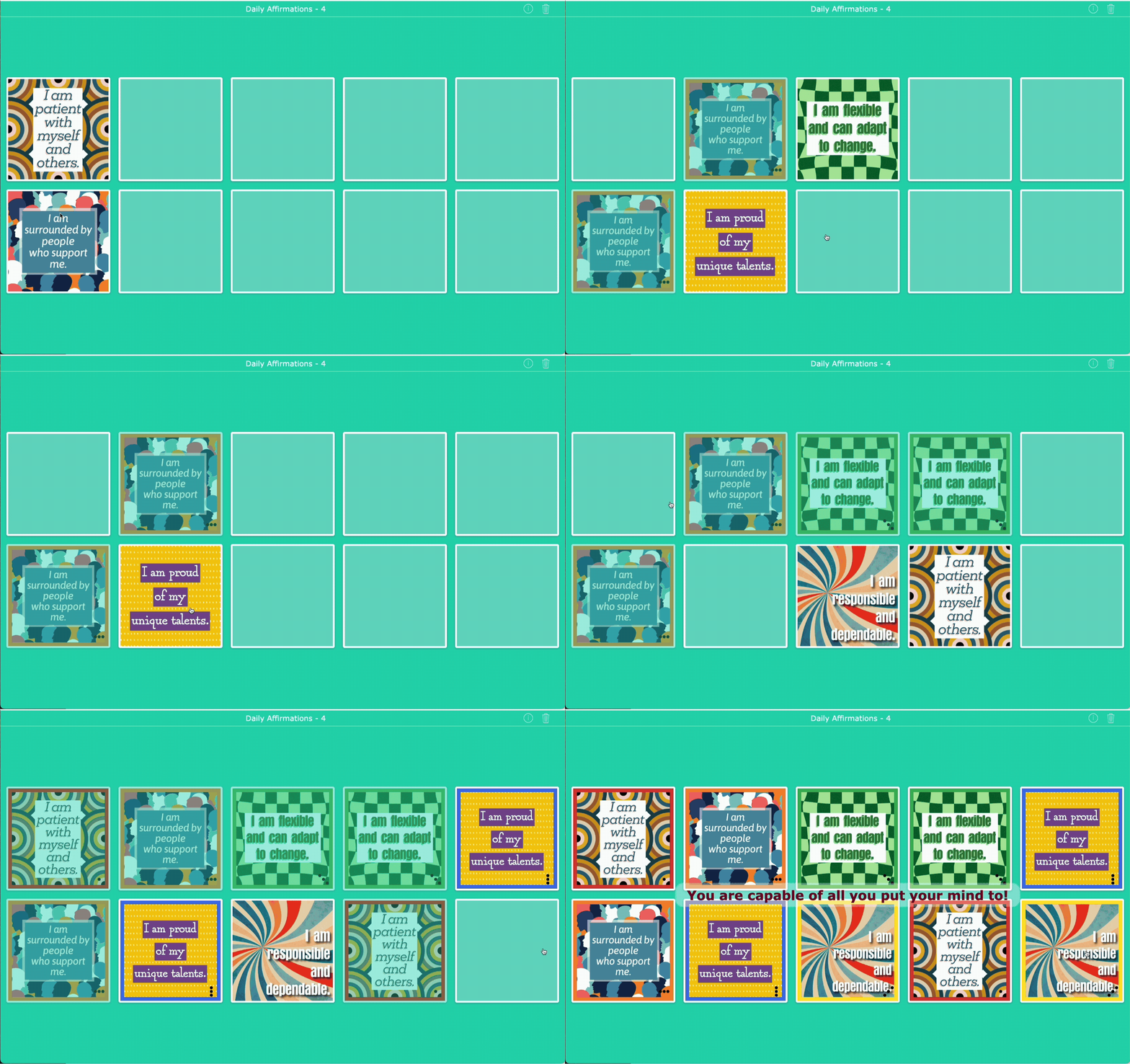
This activity fits naturally into any affirmation routine. If you already use the jigsaw puzzles, rotate in a memory game to add variety while keeping the same structure. To extend the learning, invite students to choose one affirmation they matched, write it in their notebook or planner, and reflect later in the week on how they applied it.
How this positive affirmation activity strengthens student well-being:
- Functions as both an affirmation lesson idea and a fun, brain-engaging game
- Supports visual memory and recall
- Encourages sustained attention and focus
- Offers a familiar, low-pressure game format
- Reinforces affirmations in a playful way
- Works across grade levels and time slots
3. Positive Affirmation Word Game to Spark Discussion and Reflection
| Icon | Category | Details |
|---|---|---|
| 🧩 | BookWidgets widget | Snowman |
| ⭐️ | Best for | Deductive reasoning, Sparking discussion around affirmations |
| 🤝 | Interaction | Individual or whole class |
| ⏱️ | Time needed | 5–10 minutes |
The Snowman widget invites students to guess letters and uncover a hidden positive affirmation, one step at a time. As they solve the puzzle, students practice spelling, reasoning, and patience while revealing an encouraging message. Teachers can choose general affirmations or focus on a specific SEL competency, such as self-awareness, self-management, or responsible decision-making. After solving one puzzle, students can refresh their screen to reveal another affirmation.

Once students reveal the affirmation, invite them to discuss what it looks like in everyday life. For example, if the message is "I am capable of achieving my goals," ask students what actions people take to achieve their goals and which steps they could take themselves. To deepen the reflection, have students write their ideas in a notebook or journal.
Why this SEL affirmation game works in the classroom:
- Encourages focus, spelling, and reasoning
- Builds anticipation and engagement
- Reinforces affirmations in a playful format
- Promotes reflection through an interactive routine
- Suitable for whole-class or individual use
4. Affirmation Spinner Activity for Student Discussion and Reflection
| Icon | Category | Details |
|---|---|---|
| 🧩 | BookWidgets widget | Randomness |
| ⭐️ | Best for | Quick discussions and daily reflection |
| 🤝 | Interaction | Individual, pairs, small groups, or whole class |
| ⏱️ | Time needed | 2–5 minutes |
The Randomness widget is a fast and flexible way to bring affirmations into your classroom routine. Each of the three spinner sets contains over 20 different daily affirmations that can be used throughout the school year.

Teachers can display the spinner on an interactive whiteboard to spark a whole-class discussion or use it as part of a station activity. Students can also spin individually, record the affirmation in a journal, or discuss with a partner or small group how the message applies to their lives and which actions they can take to put it into practice.
This activity is especially valuable at the beginning of the school year or after a school break, when teachers are introducing or revisiting classroom expectations. Invite students to connect the chosen affirmation to a classroom rule or shared value and discuss what that looks like in practice.
How this affirmation activity builds SEL skills:
- Quick and easy to implement
- Offers over 20 unique messages per set
- Supports both whole-class and individual engagement
- Encourages reflection, writing, and speaking
- Builds connections to classroom expectations and routines
5. Positive Affirmation Journal Prompts for Self-Reflection and Growth
| Icon | Category | Details |
|---|---|---|
| 🧩 | BookWidgets widget | Split Worksheet |
| 🌟 | Best for | Deep self-reflection and personal growth |
| 🤝 | Interaction | Individual |
| ⏱️ | Time needed | 10–15 minutes |
This daily affirmation journaling activity invites students to reflect deeply on an affirmation and connect it to their personal experiences, goals, and emotions. Using the Split Worksheet widget, students see a randomly selected daily affirmation on one side and a set of reflection prompts on the other. This combination blends spontaneity with intentional writing, creating a powerful space for self-awareness and growth.
Students respond to three key questions:
- How this affirmation resonates with you
- How you embody it now
- How you can apply it to experiences today and in the future
To promote metacognition, the journaling activity also includes a self-assessment rubric where students evaluate their understanding, reflection, application, and writing clarity. A voice recording option allows them to explain their thinking and set personal goals for improvement.

Teachers can assign this activity repeatedly throughout the school year. Students can clear their responses and spin for a new affirmation each time, while every submission is saved in the Reporting Dashboard. This makes it easy to review reflections, provide meaningful feedback, and build an ongoing dialogue with students.
This activity works especially well as a weekly or biweekly reflection during advisory, SEL blocks, or writing workshops. Over time, students build a collection of reflections they can revisit to recognize their personal growth. Older students may even use these reflections as inspiration for college or scholarship essays.
Why this student affirmation routine strengthens SEL skills:
- Combines writing, reflection, and critical thinking
- Encourages personal connection and a future-focused mindset
- Builds metacognitive skills through self-assessment
- Supports student voice with writing and speaking
- Creates a safe, ongoing space for teacher–student dialogue
Thanksgiving-Themed Gratitude Activities for SEL (Bonus!)
Bring gratitude and reflection into your classroom with these four Thanksgiving-themed SEL activities for students. Each digital gratitude activity helps students practice emotional awareness, express appreciation, and build a stronger classroom community. While these Thanksgiving activities are perfect for November, they can also be used throughout the school year as meaningful social-emotional learning activities.
1. Grateful Turkey Hand
This digital version of the classic Thanksgiving hand turkey taps into nostalgia while strengthening design skills and reflective thinking. Students use digital stickers or the drawing tools to create their turkey hand and list three things they are grateful for. Great as a quick class project without all of the mess!

2. Gratitude Frayer – Whiteboard Version
Using a Frayer Model layout, students fill in each quadrant—Person, Place, Thing, and Activity—with text, images, or drawings that represent what they are grateful for. This structure supports emotional vocabulary development and encourages more specific, thoughtful reflection.

3. Gratitude Frayer – Writing-Only Version
A quicker alternative to the Whiteboard version, this writing-only Frayer uses an Annotate Picture question type. Students type directly into each labeled space—Person, Place, Thing, and Activity—to complete their gratitude reflection.

4. Gratitude Spinner Wheel
Perfect for partner discussions, morning meetings, or full-class sharing, this Gratitude Spinner Wheel prompts students to reflect on specific things they are thankful for. The element of chance keeps participation lively and helps normalize verbal expression of gratitude.

Gratitude routines support the five core SEL competencies:self-awareness, self-management, social awareness, relationship skills, and responsible decision-making. Whether used during Thanksgiving or anytime students need grounding and connection, these activities help build a positive classroom climate where reflection and well-being thrive.
How to Incorporate Student Choice and Voice in Classroom Affirmation Routines
Daily affirmations in the classroom become even more meaningful when students take an active role in creating and selecting affirmation activities. Giving students voice and choice increases engagement and strengthens the personal connection they have to the messages.
Offer SEL activity choice through a choice board
After students are familiar with the daily affirmation routine and have tried different types of classroom affirmation activity, keep things fresh by providing a choice board. You can include a mix of the daily affirmation activities featured in this blog post, such as puzzles, memory games, Snowman, and spinners, or offer multiple options within the same format. The key is giving students the freedom to select the affirmation activity that resonates most with them while still keeping the overall routine consistent.
The example below uses the Planner widget to create a Daily Affirmation Games Choice Board. Teachers can link directly to the activities and update them as needed throughout the year, making it easy to rotate in new games or focus on a specific theme.

Incorporating choice and voice transforms affirmations from something students simply receive into something they help shape, making the routine more personal, collaborative, and impactful.
Create student-designed affirmations
Invite students to write their own daily affirmation and create a visual affirmation design to go with it. This can be done digitally with tools like Adobe Express, Canva, or Google Slides, or through traditional arts-and-crafts on paper. (Personally, I used Adobe Express to create many of the images in this post’s activity sets and found the process calming and uplifting.)
For a blended learning twist, students can photograph their paper designs to make them digital then turn them into you by uploading them using a Photo question. Physical versions can be displayed around the room, while digital versions can be saved for use in classroom activities.
You can launch this process with the Create Your Own Affirmation Visual activity below. It guides students through writing their daily affirmation, designing it visually, and submitting their work digitally so it’s ready to use in future class SEL activities.

After students have submitted their visuals, you can turn them into interactive BookWidgets activities, such as memory games, randomness spinners, or jigsaw puzzles, so the class can engage with messages created by their peers.
Tips for Classroom Affirmation Routines
Daily affirmation routines, whether you use quick SEL affirmation games, reflective affirmation lesson ideas, or other activities for students, work best when they are consistent, intentional, and responsive to student needs. Whether you use them daily, weekly, or at another regular interval, small adjustments in timing, structure, and student involvement can make a big difference in how students engage with and benefit from the routine.
Here are some practical tips to help you keep your classroom affirmation routine effective and meaningful:
 Use key transitions as entry points: The first weeks of school and the days following long breaks are ideal times to introduce or reintroduce daily affirmation routines. These moments offer a natural opportunity to reset, strengthen classroom community, and re-establish shared expectations.
 Stay consistent, with room to adapt: Choose a regular time for your classroom affirmation routine, such as the start or end of class, after lunch, or during a Friday wrap-up. Keeping the routine predictable helps students know what to expect. Adjust the format or timing if your class’s needs shift.
 Start small: You don’t need to introduce every affirmation activity type right away. Begin with one or two activities that feel manageable, then expand as the habit becomes part of your classroom culture.
 Invite student voice: Let students choose the day’s affirmation activity via Choice Boards, or have them design affirmation graphics in tools like Adobe Express or Canva to incorporate into your BookWidgets activities.
 Make sharing optional: Provide opportunities for students to talk or write about how an affirmation applies to their life, but keep personal sharing voluntary to maintain a safe and supportive space for reflection and self-expression.
 Link to classroom culture: Select daily affirmations that reflect your class values, current goals, or curriculum themes. For example, during test prep season, highlight messages about persistence, focus, confidence, and a growth mindset.
 Celebrate progress over time: Create a gallery of favorite daily affirmations and build in reflection checkpoints at the end of the week, month, or semester. These moments help students see how their thinking and positive self-talk have evolved, connect past affirmations to current experiences, and recognize their growth.
Daily affirmations for students are most impactful when woven into a broader classroom culture that supports empathy, growth, and belonging. They require only a few minutes but can leave a lasting impression.
Wrap Up
Daily affirmations don't have to take much time to make a lasting impact. Whether you use them every day or once a week, these small moments of reflection can help students build confidence, strengthen relationships, and create a more positive classroom culture.
I hope these 55 affirmation activities inspire you to create a routine that works for your students and supports SEL throughout the school year.
Want to keep exploring what you can do with BookWidgets?
✔️ Sign up for upcoming free webinars and view recordings on the BookWidgets Teacher Academy Page.
✔️ Follow BookWidgets on BlueSky and LinkedIn and join our Facebook teacher community to exchange ideas and connect with educators from around the world.
✔️ I'd also love to connect with you! Follow me on BlueSky, Facebook, or LinkedIn for more classroom ideas and BookWidgets inspiration.


