8 Interactive Fraction Activities for Elementary Math Using BookWidgets
 Božica Borbaš & Kate Baker —
Teaching fractions can be challenging for students, especially when concepts like numerator, denominator, and equivalence feel abstract.
With BookWidgets, teachers can turn fractions into interactive, visual learning experiences that help students see what fractions represent, not just calculate them. From digital manipulatives to game-based practice and formative assessment, BookWidgets supports conceptual understanding and gives teachers insight into student thinking.
Below are 8 classroom-ready fraction activities you can use in elementary and middle school math. The activities are organized to reflect a natural learning progression—from introducing fraction language to visual modeling, practice, reasoning, and assessment.
Before we begin: All of the digital fraction activities in this post were created with BookWidgets, an all-in-one platform for creating interactive lessons, assessing student learning, and giving instant feedback. You can make a free copy of each activity directly from this post, or browse the full collection in this shared BookWidgets folder:
Math Fractions Collection
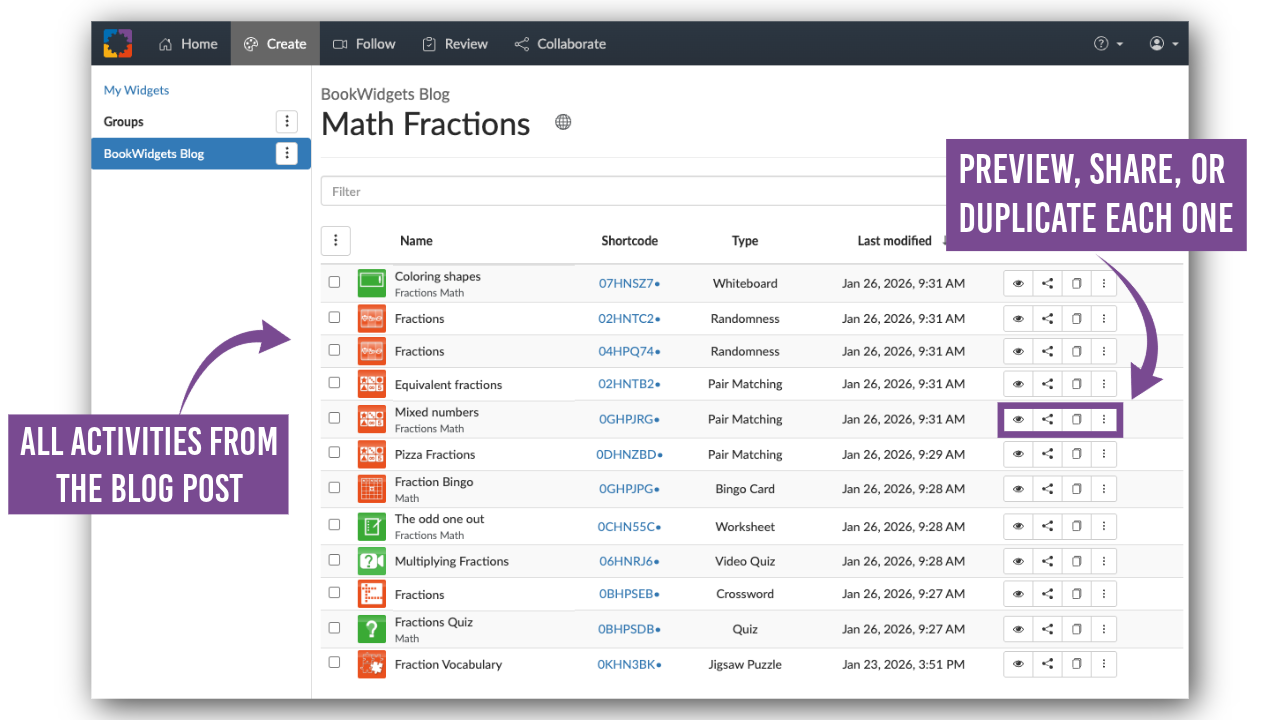
Click to open the folder and explore all fraction activities.
8 Interactive Ways to Teach Fractions in Elementary Math
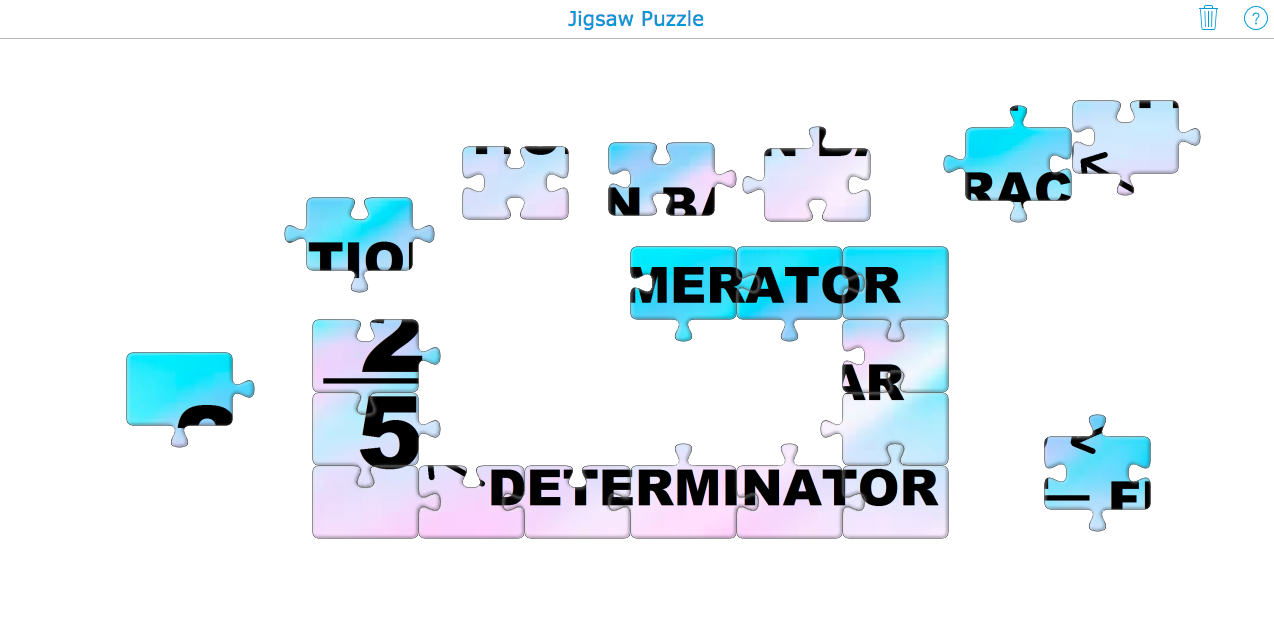
1. Jigsaw Puzzle: Introduce Fraction Vocabulary Visually
Fraction instruction starts with language. Students need a clear understanding of terms such as numerator, denominator, and fraction bar before they can reason about fractions meaningfully.
The Jigsaw Puzzle widget offers a low-pressure, visual way to introduce this vocabulary. With the Jigsaw puzzle widget, students assemble pieces to reveal fraction terminology and representations.
After completing the puzzle, students can write definitions in their notebooks or explain terms aloud. This activity works well as a warm-up, a learning station, or a quick review for students who need reinforcement before moving on.
2. Whiteboard: Build Understanding with Visual Fraction Models
Once students know the language of fractions, they need opportunities to explore what fractions look like.
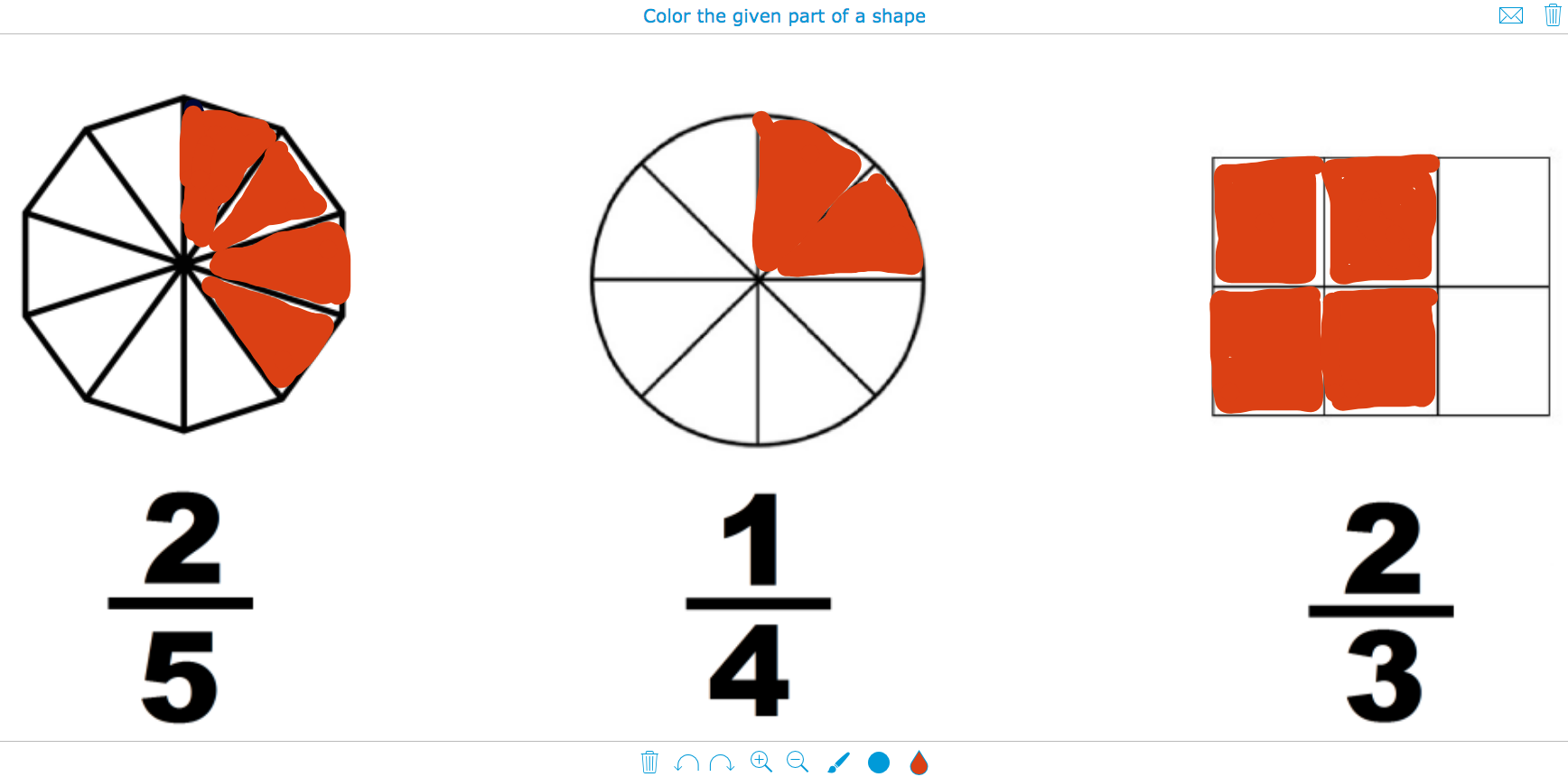
With the Whiteboard widget, teachers can insert shapes divided into equal parts and ask students to shade specific fractions. This supports visual reasoning and helps students connect symbols to meaning.
For example, students might be asked to color 2/5 of a shape divided into ten equal sections. This naturally leads to productive struggle as students reason through what the fraction represents. Precision is not the goal here. The focus is on understanding fraction relationships through visual modeling.
3. Randomness: Identify, Classify, and Talk About Fractions
After students have worked with visual models, they are ready to identify and classify fractions more formally.
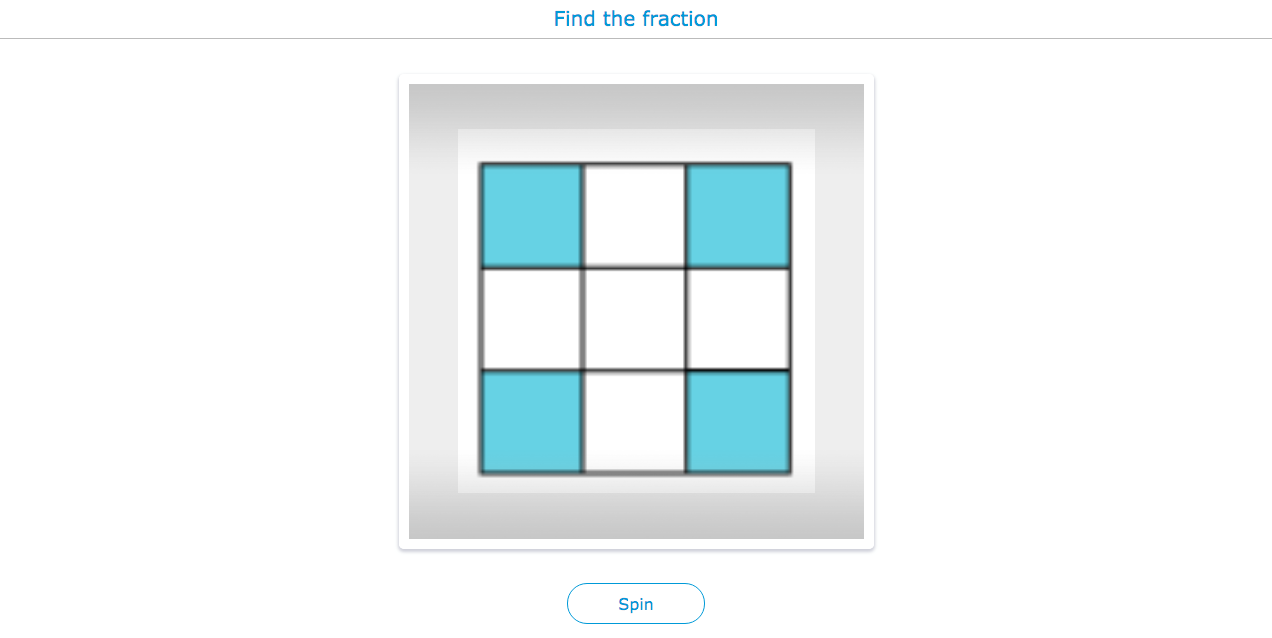
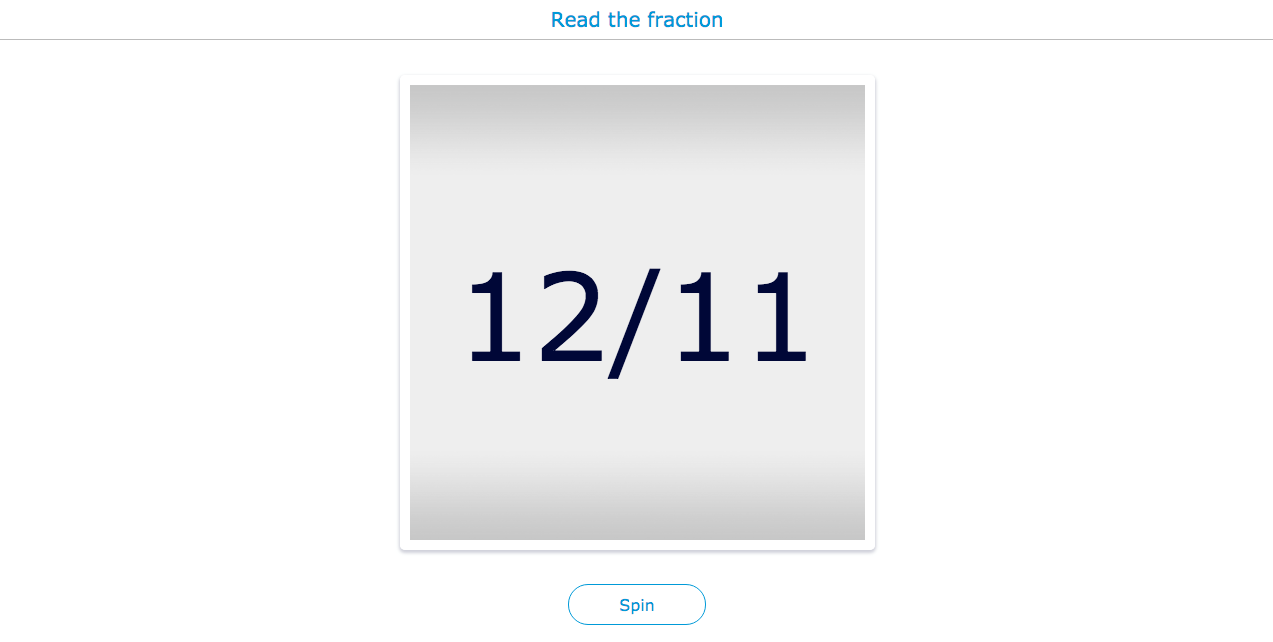
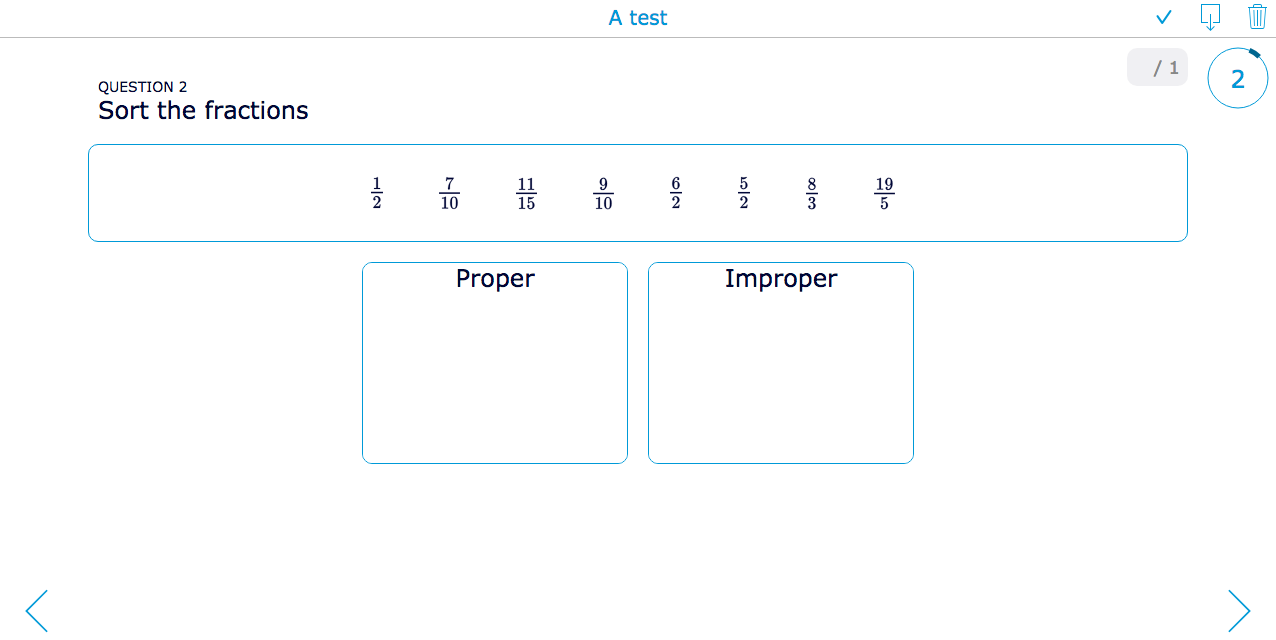
The Randomness widget helps students practice identifying fractions shown in visual models. Students determine the numerator and denominator, classify fractions as proper or improper, and convert improper fractions to mixed numbers.
This activity works especially well for whole-class instruction using a smartboard, where students take turns spinning and explaining their reasoning aloud. Because each spin is unpredictable, students stay engaged and listen carefully to their peers. It can also be used in small groups to encourage discussion and mathematical reasoning.
4. Pair Matching: Explore Equivalent Fractions and Mixed Numbers
Once students can identify and classify fractions, they are ready to explore relationships between them.
The Pair Matching widget helps students recognize how different fractions can represent the same value. One effective use is matching equivalent fractions, allowing students to connect symbolic notation with visual meaning.
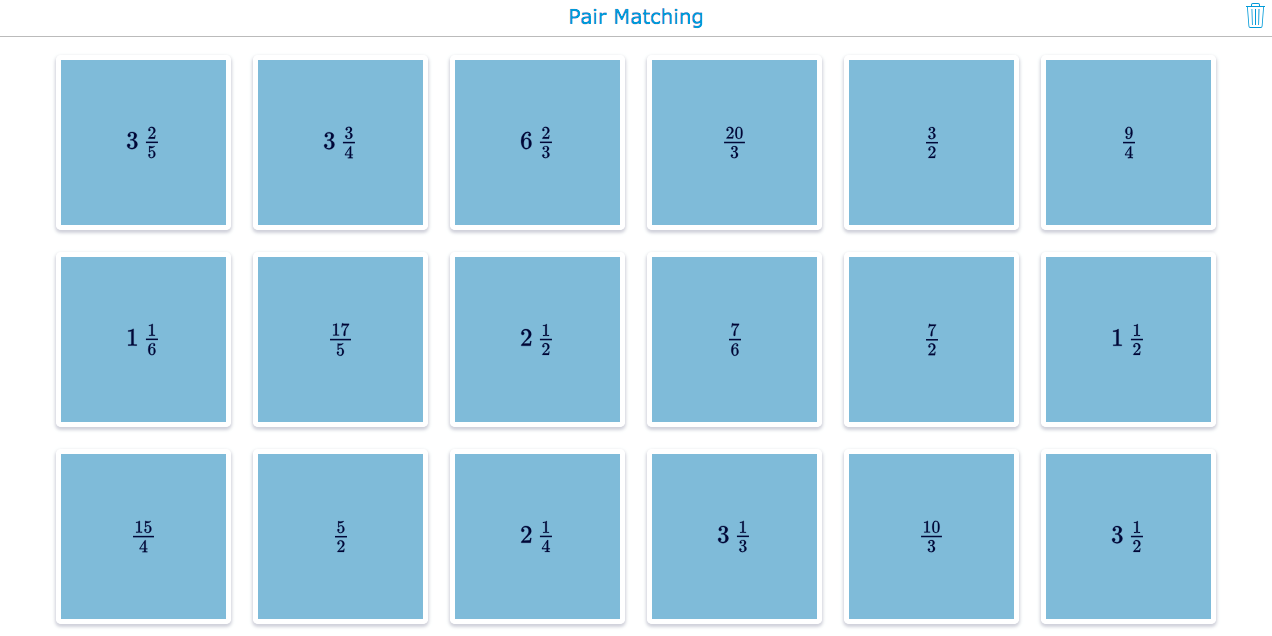
The same widget can also be used to match improper fractions with their corresponding mixed numbers. This challenges students to think flexibly about fraction representations and strengthens number sense.
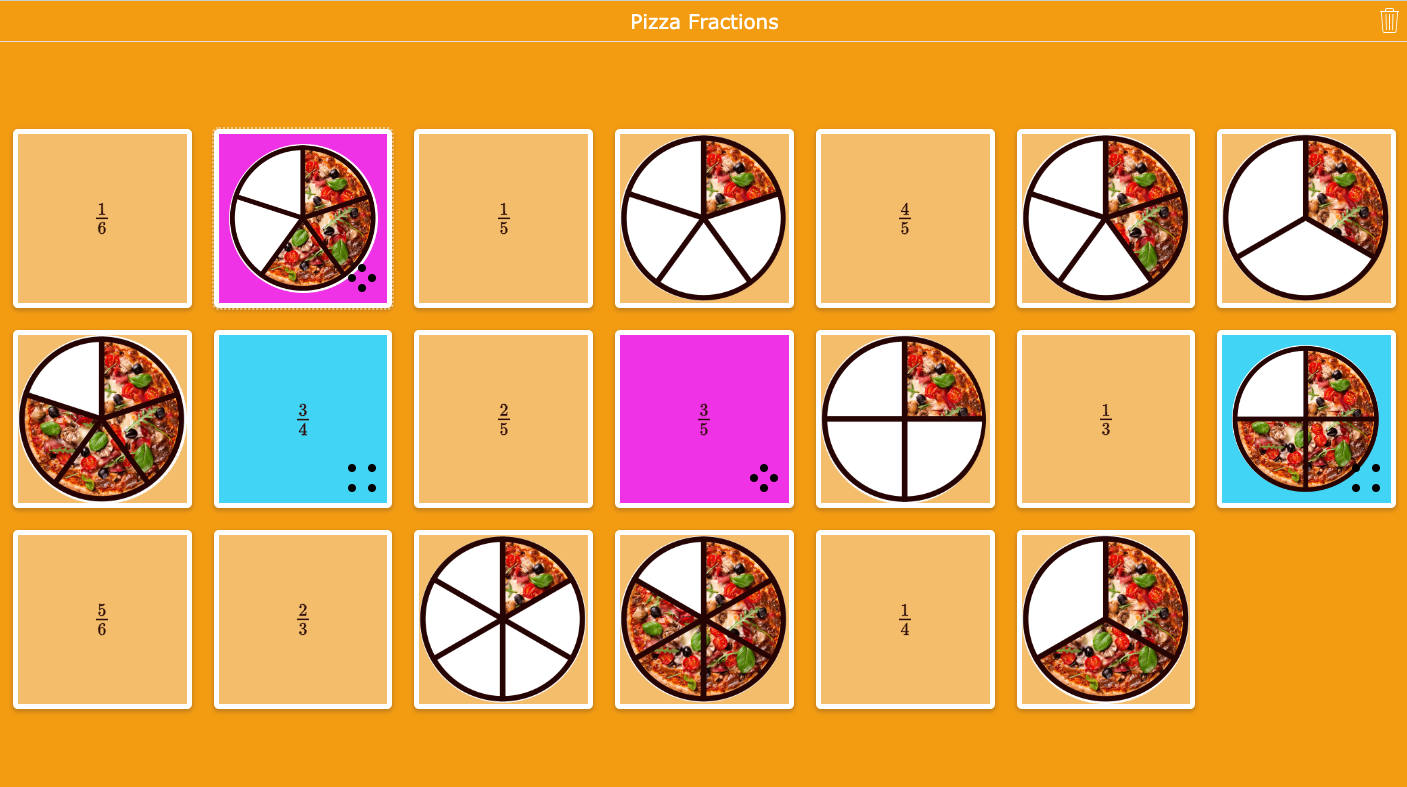
A fun variation of this activity uses a pizza-themed Pair Matching game to help students spatially recognize equivalent fractions. By matching different visual slices of pizza, students connect symbolic fraction notation to concrete visual models in an engaging way.
💡 Pro tip: In the General tab of the widget editor, enable the option to show matched card pairs using colors and symbols. This ensures students with perceptual impairments can clearly recognize when a match has been made.
5. Bingo: Practice Simplifying Fractions Through Play
After working with fraction relationships, students benefit from targeted practice.
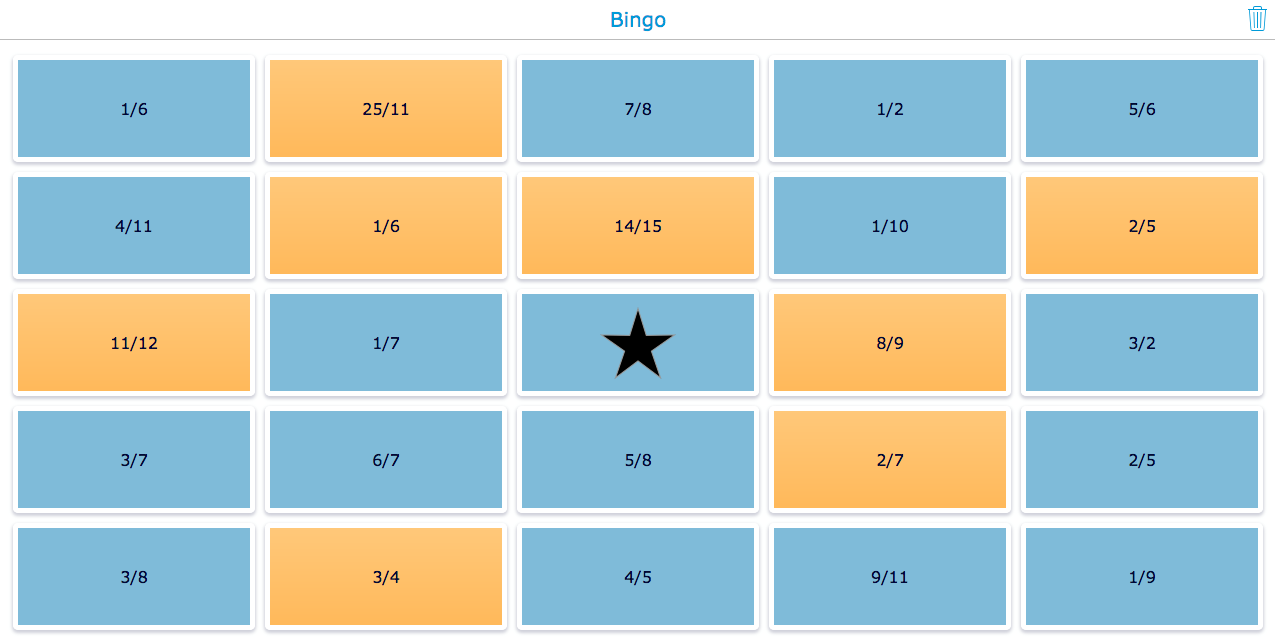
The Bingo game widget is an effective way to help students practice simplifying fractions while keeping engagement high. Each student receives a unique bingo card containing fractions in their simplest form.
The teacher calls out fractions that need to be reduced, and students simplify them before marking their cards. The combination of mental math, competition, and immediate feedback reinforces essential fraction skills in an enjoyable way.
6. Questions: Assess and Challenge Fraction Understanding
Strong fraction instruction depends on asking the right questions.
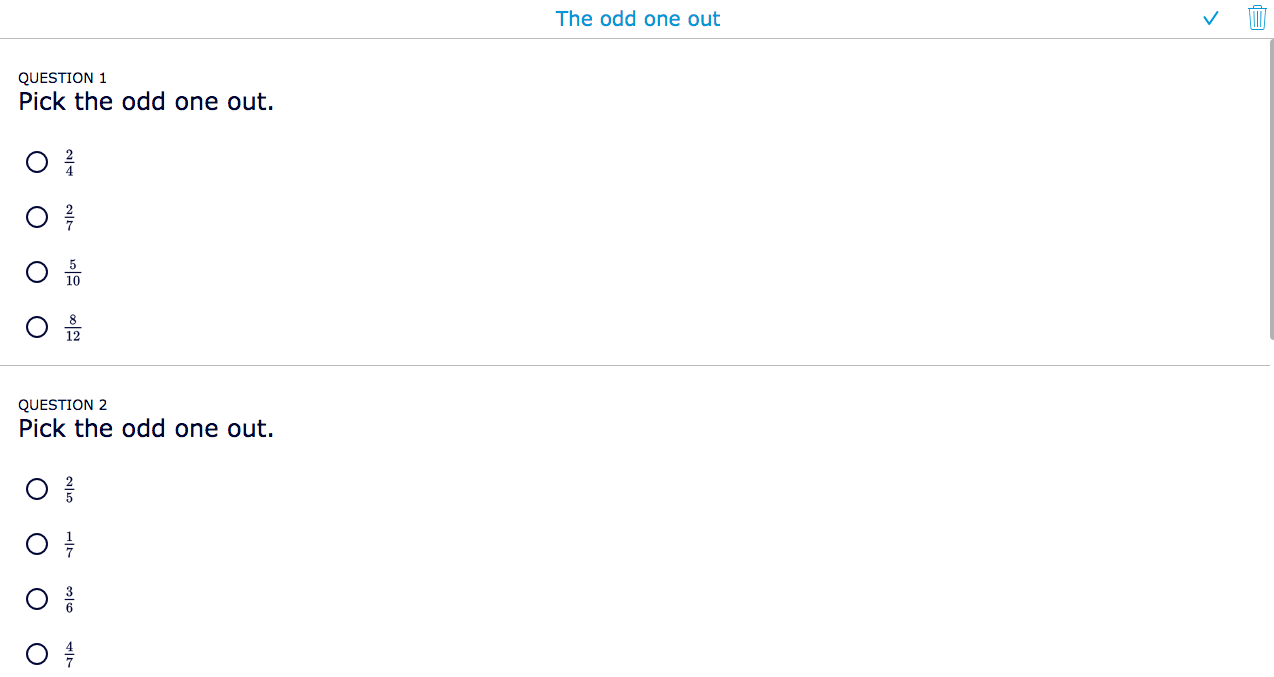
With BookWidgets, teachers can design questions that assess understanding, surface misconceptions, and push student thinking. The Worksheet widget supports longer, scrollable sets of questions, while the Quiz widget presents one question at a time to help students focus. Teachers can also use question pages to group related fraction questions together.
One effective formative learning approach is asking students to identify the “odd one out” from a group of fractions without giving explicit instructions. This encourages students to reason mathematically and justify their thinking.
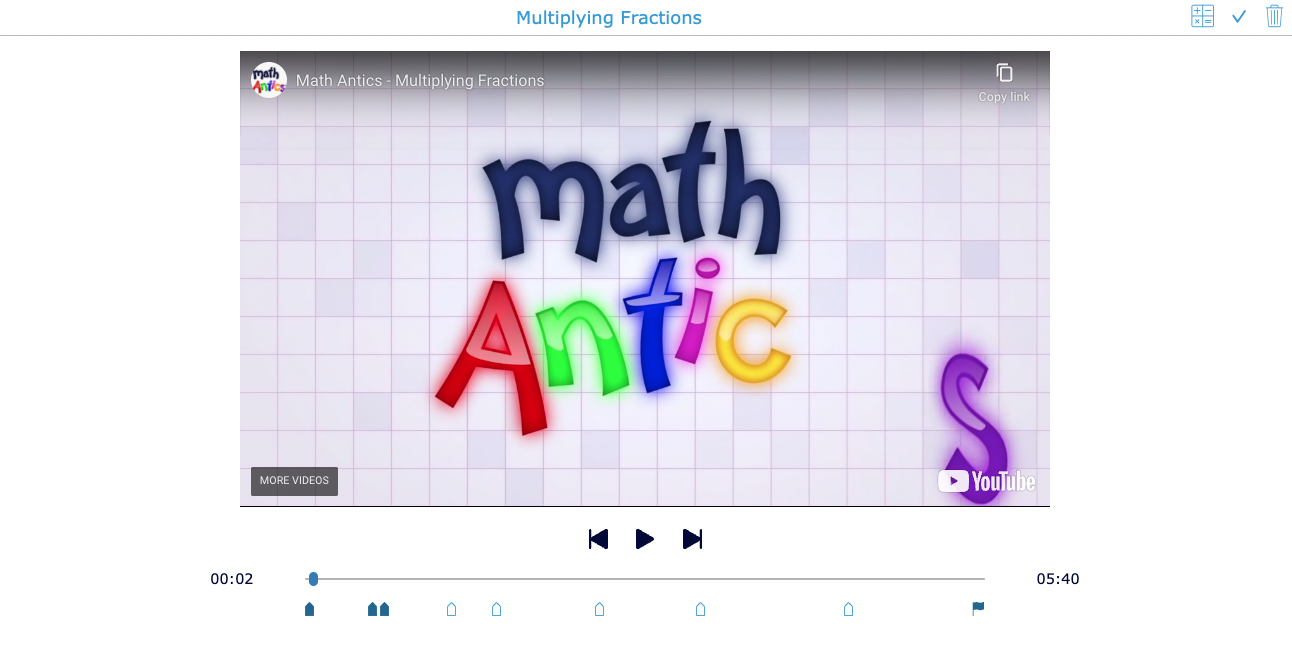
Questions about fractions can also be embedded directly into instructional videos using the Video Quiz widget. In this example, the video pauses at key moments so students can respond to questions that check for understanding before moving on.
💡 Pro tip: Creating your own math explainer videos or screen recordings is easier than you might think. This blog post, How Your Video Lessons Can Be Even More Successful When You're on Screen, shares practical tips and tools. For additional Video Quiz ideas, check out this blog post: 10+ Powerful Ways to Use an Interactive Video Quiz in your Classroom.
7. Crossword: Review Fraction Language and Concepts
Before assessing, it helps to revisit key terms and ideas.
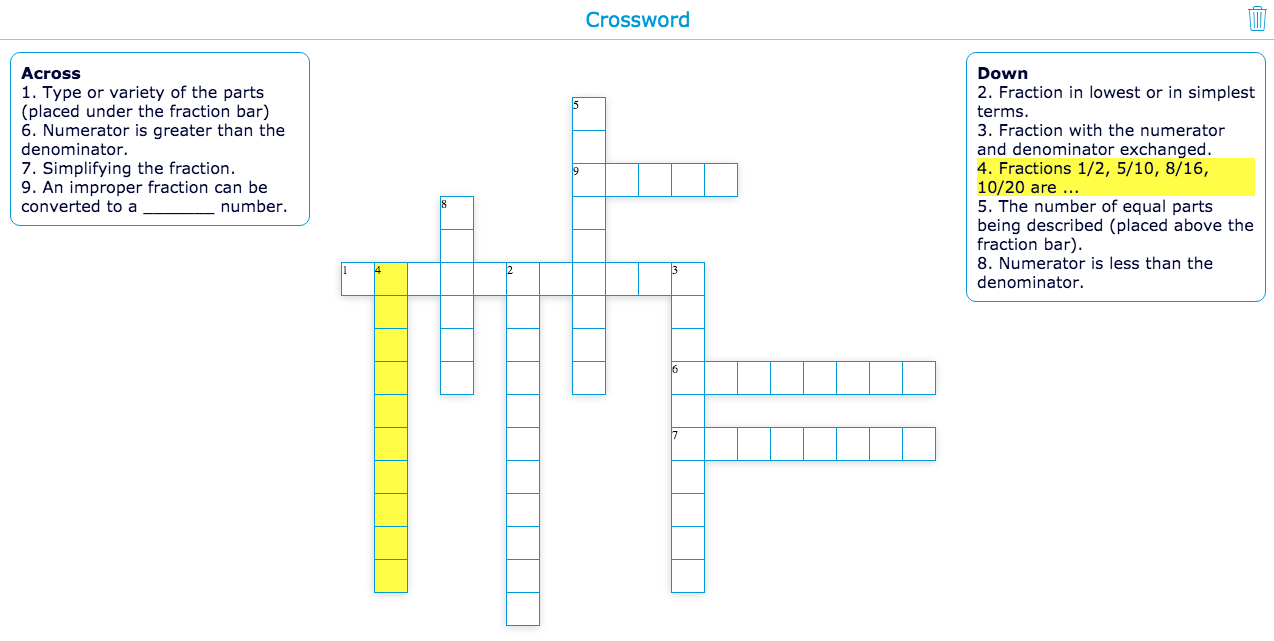
The Crossword widget provides a playful way to reinforce fraction vocabulary. Students review and apply terms such as numerator, denominator, proper, improper, and equivalent fractions while solving the puzzle.
This activity works well as a review station, an early finisher task, or a quick formative check to identify lingering gaps in understanding.
8. Quiz: Check Understanding and Provide Feedback
To close the learning loop, teachers can use the Quiz widget to assess student understanding of fractions.
The Quiz widget supports a variety of question types (37 to be exact with 30 questions that are autoscored), including numeric answers formatted as fractions or mixed numbers. Automated grading saves time and allows teachers to focus on analyzing results and responding to student needs.
Quizzes can be used as formative checks during a unit or as summative assessments at the end.
Wrap Up
Fractions can be engaging, visual, and meaningful when students have the right tools and experiences. With interactive visuals, purposeful practice, and built-in feedback, students can develop a deeper understanding of fraction concepts while teachers gain insight into student thinking.
These examples show just a few ways BookWidgets can support fraction instruction. The same approach can be applied across math topics and grade levels to make learning more engaging and meaningful.
Looking for more digital math lessons? Check out this blog post: The Ultimate Classroom Collection of 30+ Free Interactive Math Activities.
Want to learn even more about creating and assessing engaging digital activities with BookWidgets?
✔️ If you're new to BookWidgets, start by checking out our Getting Started with BookWidgets blog post to help you get up and running quickly.
✔️ Sign up for upcoming free webinars and view recordings on the BookWidgets Teacher Academy Page.
✔️ Follow BookWidgets on BlueSky and LinkedIn and join our teacher community on Facebook!


